

In chapter 4 of The New Big Book of Christian Mysticism I look at the Hebrew Bible, Greek philosophy and pagan religion, and of course the stories of Jesus and his followers, as three distinct sources for creating the spiritual phenomenon of Christian Mysticism.
For the Jewish tradition, I offer this verse from I Samuel as a bit of insight into the mystical dimension of ancient Hebrew Spirituality:
“Then the spirit of the Lord will possess you, and you will be in a prophetic frenzy along with them and be turned into a different person.” — I Samuel 10:6, NRSV
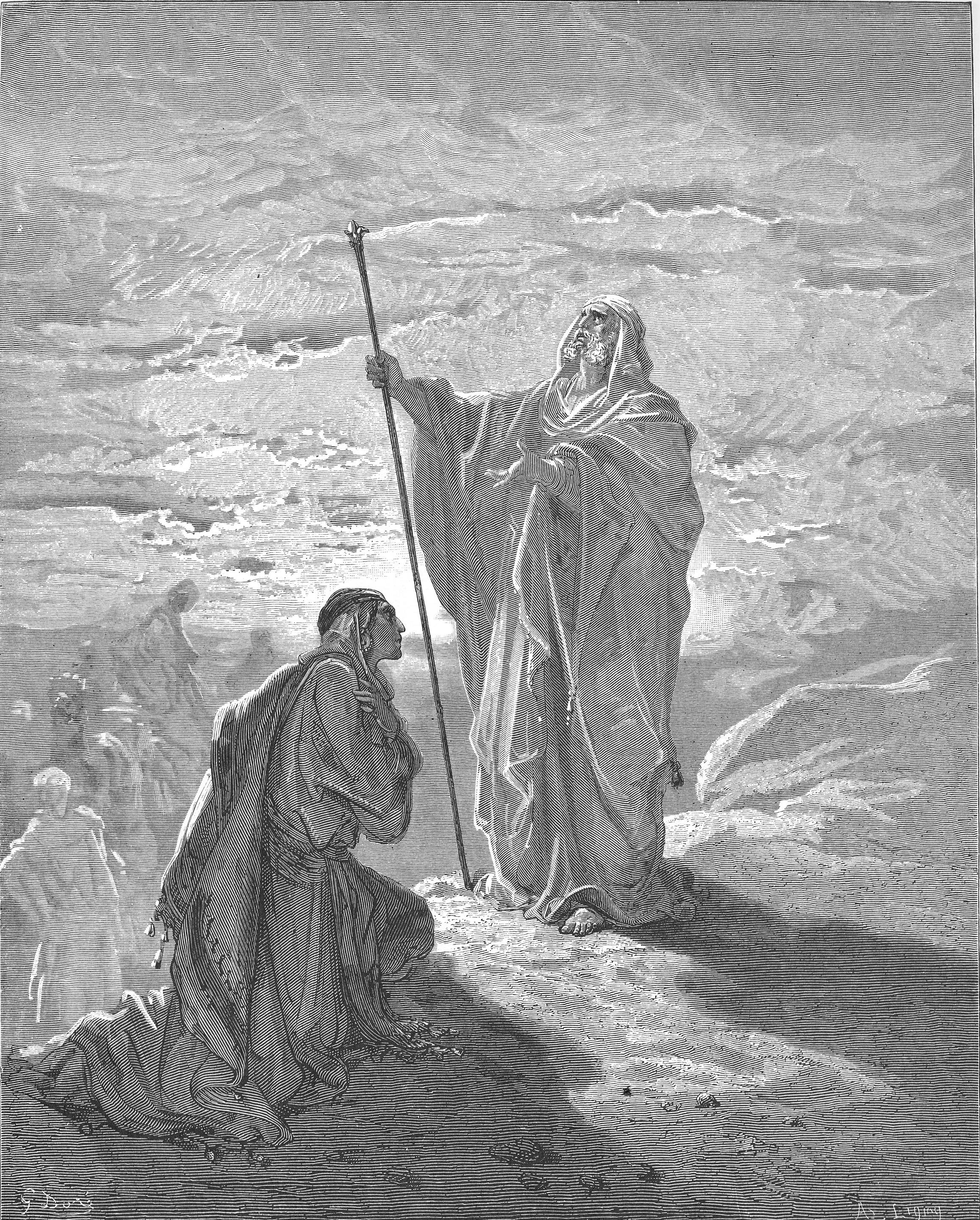
These are words that the prophet Samuel speaks over Saul as he is being anointed the first king of Israel. These are prophetic words: Samuel is describing an event before it happens, that will help Samuel to realize his destiny not only as a the ruler of the people but as a prophet of God. The triggering event is an encounter he would have later that day with a group of prophets, making ecstatic music as they travel from a shrine. At this point, Saul himself would receive the Spirit of the Lord (literally, “the breath of Yahweh”) and would himself be transformed into a prophet — indeed, into a new (“different”) person altogether.
Could the Spirit of the Lord/the breath of Yahweh be understood as roughly equivalent to what Christians understand the Holy Spirit to be?
If we accept that idea, then Samuel is telling Saul that he is going to receive the Holy Spirit, respond with words of prophetic utterance, and ultimately becoming an entirely new person.
In the Christian tradition, there is a sense that people filled with the Holy Spirit of God will receive charismatic gifts; the most famous/controversial of such gifts if glossolalia, or “speaking in tongues,” but the ability to prophesy is also considered a gift of the Spirit (see I Corinthians 12). It’s important here to remember that prophecy does not mean foretelling the future so much as it simply means the ability to speak the words of God, which might be just as oriented toward the present as toward the future.
Saul was a king, an elite figure at the pinnacle of Hebrew society. But the New Testament makes it clear that the gifts of the Holy Spirit are meant for everyone: not just the privileged few.
Today, charismatic spirituality is controversial among many Christians because it often seems to be intertwined with fundamentalist or dualistic theology (with an overt emphasis on such things as spiritual warfare, fighting the devil, and so forth). For those of us who are drawn to the wisdom of the mystics, I think I Samuel 10:6 reminds us that the transforming power of the Spirit has roots that go much deeper than the New Testament. In fact, I would argue that the template Samuel offers to Saul is truly universal in its application. To be a contemplative is to consent to the breath of Yahweh (the Spirit who acts within us); this consent will not only guide us into the wisdom of God that leads us into community (“prophesy with them”) but also into a heart transformed by that indwelling Spirit of Life (“a different person”).
May we all find such inner transformation.
