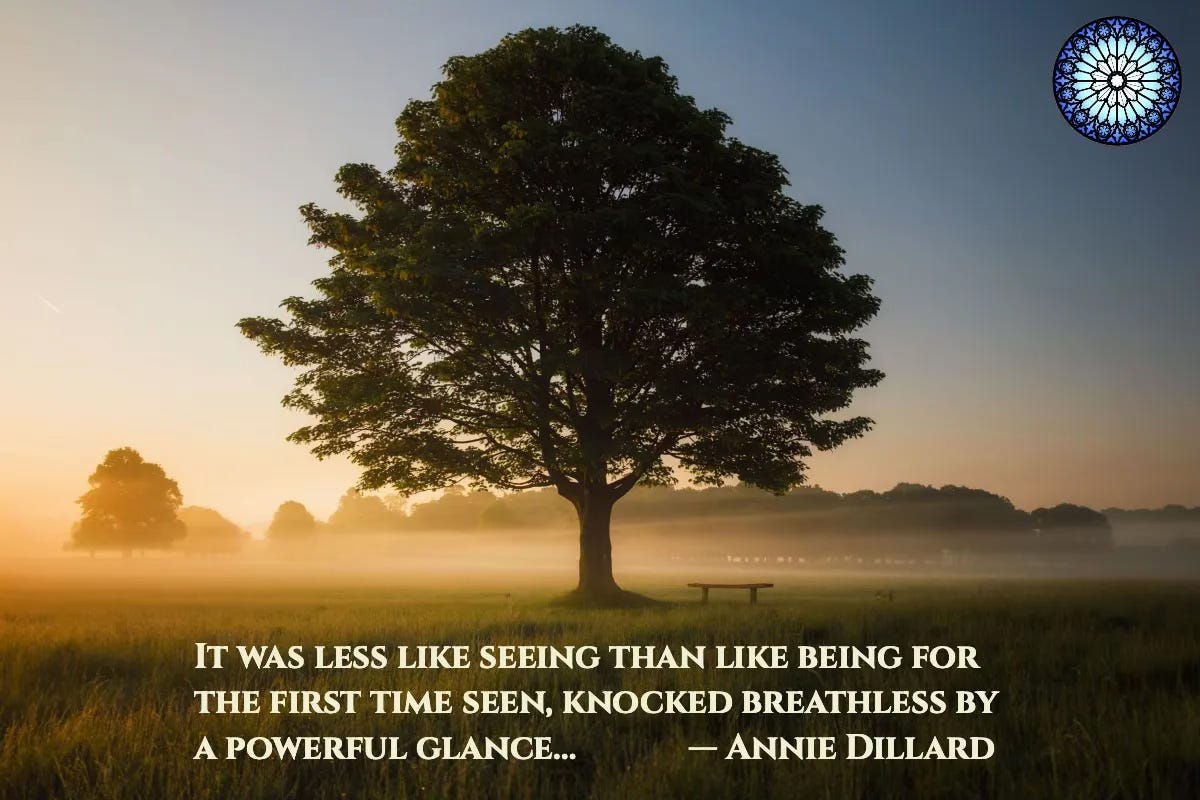
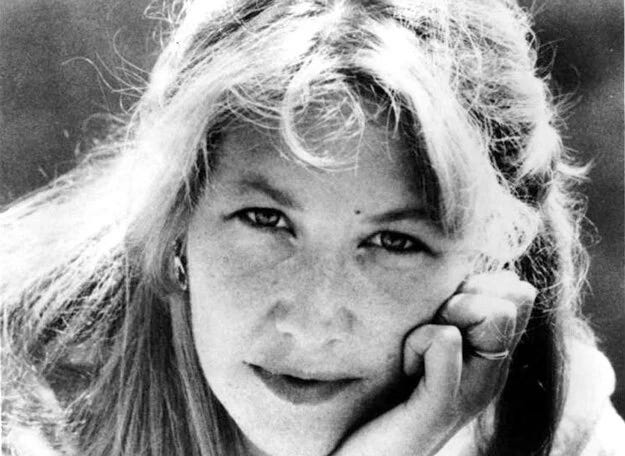
Note: The following meditation was posted back in April 2025, but I’m sharing it again now in memory of the amazing nature mystic (and gifted writer) Annie Dillard, who passed away on September 15, 2026. Rest in peace, Tinker Creek pilgrim — thank you for your luminous words.
One day I was walking along Tinker Creek thinking of nothing at all and I saw the tree with the lights in it. I saw the backyard cedar where the mourning doves roost charged and transfigured, each cell buzzing with flame. I stood on the grass with the lights in it, grass that was wholly fire, utterly focused and utterly dreamed. It was less like seeing than like being for the first time seen, knocked breathless by a powerful glance… Gradually the lights went out in the cedar, the colors died, the cells unflamed and disappeared. I was still ringing. I had been my whole life a bell, and never knew it until at that moment I was lifted and struck. — Annie Dillard
In her classic book Pilgrim at Tinker Creek, Annie Dillard offers a powerful insight into nature mysticism by describing her visionary encounter with a “tree with the lights in it” — which makes me think of the famous lines by Elizabeth Barrett Browning:
Earth’s crammed with heaven,
And every common bush afire with God;
But only he who sees, takes off his shoes,
The rest sit round it and pluck blackberries,
And daub their natural faces unaware…
Both Dillard and Browning remind us that the mystical encounter is for more available to us than we might we realize, but for some inexplicable reason we often miss it. Maybe we’re just too preoccupied with the cares of this world, like Browning’s blackberry pickers; or maybe we keep seeking the vision, like Dillard, only to find it is maddeningly elusive. Wanting the vision of the burning bush or the flame-lit tree is no guarantee that the epiphany will be granted.
What to do, then? We keep watch. We pay attention. And we need to persevere, trusting that the vision of heaven might be granted at any time.
Julian of Norwich said there are two types of prayer: the prayer of seeking God, and the prayer of beholding. We seek the burning bush, the tree with the lights, the mystical vision. We seek the epiphany on the street corner or the angel with the long dart of gold. And sometimes, probably when we least expect, our seeking opens up into beholding. Julian points out that, as sweet as beholding is and as arid as seeking seems, both types of prayer nourish us and please the Spirit. Part of learning to always seek the face of God is learning to understanding that even the seeking of the Divine Face is, itself, a fulfillment.