


The worst thing we ever did is pretend
God isn’t the easiest thing
in this Universe
available to every soul
in every breath. — Chelan Harkin
In “The Worst Thing,” the mystical poet Chelan Harkin reflects on the mistakes we human beings have made over the years as we have tried to make sense of God. We imagined God as a “cloud man” in the sky, far away from us and our embodied experience. We imagined a God incapable of dancing, of crying, of being present in our bones. “The worst thing we ever did,” she observes, “is pretend God isn’t the easiest thing in this Universe available to every soul in every breath.”1
Chelan is right. We’ve made God difficult.
Difficult to believe in. Difficult to relate to. Difficult to have a conversation about (it’s not easy to disagree with someone when they are convinced they have the ultimate truth). Too many of us labor under patriarchal, authoritarian images of God that reinforce all these difficulties and strip us of the possibility to re-connect with “the easiest thing” that is as close to us as our breath.
This is where contemplation comes in.
From Centering Prayer to the Prayer of the Heart to Christian meditation (or Jewish meditation, Muslim meditation, and so forth) to any other practice that invites us to rest in silence as a means of cultivating a deeper encounter with the divine, contemplation includes any spiritual exercise we undertake to weave together our embodied breath, our deep interior silence, and the sacred presence of the Spirit who is, after all, the easiest thing.
But here’s an irony. We work just as hard to make contemplation difficult as we do to make God difficult.
“I’m Not Very Good at Contemplation”
Through my work as a spiritual director, writer, speaker, and retreat leader, I have the honor of walking alongside many people, from different generations or backgrounds or professions or faiths, who are learning or seeking to go deeper in their practice of intentional silence. Again and again, people report to me, often with vulnerability, sometimes defensively, sometimes with an air of resignation, some variation of “I’m just not very good at this.”
I hear this so often that it doesn’t surprise me. It saddens me, but it doesn’t surprise me.
Usually I will ask, “Why do you say this?” And almost always, the answer will be some variation of this: “I can’t find the silence. All I have within me is an endless assault of distracting thoughts.”
If I’m feeling a little playful or snarky, I’ll reply, “Oh, you too, huh?” Because this is hardly unusual, even for seasoned contemplative old-timers like me. Most people find contemplative practice to be not some gentle doorway into blissful inner peace, but rather a humbling immersion into a torrent of seemingly chaotic thoughts, ideas, images, daydreams, fantasies, feelings, and so forth.
And when I point this out to people, they’ll say “I know, I know” as if this has all been reviewed time and time again. Any introductory course on contemplative practice will always include reminders of just how turbulent and jam-packed your ordinary stream of consciousness always seems to be.
But it’s one thing to be told this, in a theoretical and abstract way, and another thing altogether to settle your body and mind to the point that you experience it for yourself.
It’s actually a very good sign for beginning contemplatives — or even practitioners at any level of experience — to notice the flurry of activity within, even though it feels overwhelming and slightly crazy. It’s good because noticing the torrent means you’re paying attention — in contrast to how easy it can be to more or less sleepwalk through life, allowing our awareness to flit from thought to thought or idea to idea, without paying any mind to how much distracted thinking is flowing through our consciousness, at or just below the threshold of awareness.
Nevertheless, in our effort to make the easy practice of contemplation unnecessarily difficult, pretty much we all have fallen into the trap of judging our experience, naming it as “wrong” or “bad” or “inferior” because it is not living up to what we think it should be. We think that it should promptly, if not immediately, transport us into a place of delicious inner comfort and serenity. And of course, that’s not how it goes.
This is very much like getting cranky at the weather because the sky is not always sunny.
When that thought first occurred to me — that judging our meditation experience is about as useful as judging the weather — I had the insight that I’d like to share with you now. It involves the weather, the sky, and what I’d like to call “the firmament within.”
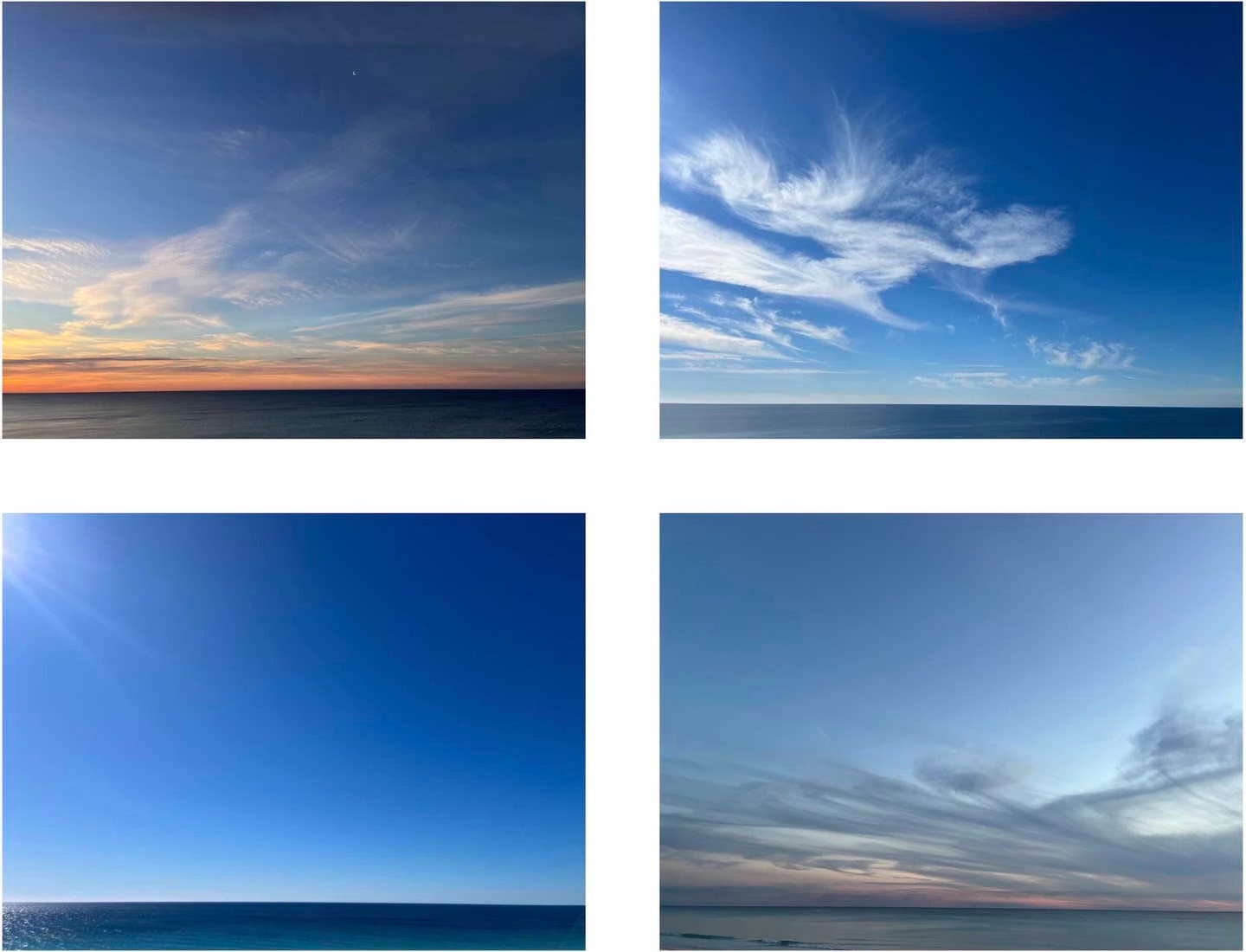
Sky Above, Sky Within
From the time that I was a child, I have loved the natural world. I love trees and the forest, the beach, the mountains, and sites of natural splendor like waterfalls or remarkable rock formations.
And above it all, always there is the beautiful sky.
In his luminous book exploring the basics of contemplative spirituality, Into the Silent Land, Martin Laird offers a fascinating metaphor to help us understand the difference between our truest and deepest identity and the mercurial changes and chances that mark the ordinary flow of human experience. “Who we truly are” he compares to a mountain, whereas the crazy and chaotic flow of life he likens to the weather that surrounds this mountain. The weather is always changing, the mountain (barring the slow process of erosion or other geological change) stays the same.
The marvelous world of thoughts, sensation, emotions, and inspiration, the spectacular world of creation around us, are all patterns of stunning weather on the holy mountain of God. But we are not the weather. We are the mountain… When the mind is brought to stillness we see that we are the mountain and not the changing patterns of weather appearing on the mountain. We are the awareness in which thoughts and feelings (what we take to be ourselves) appear like so much weather on Mount Zion… Stillness reveals that we are the silent, vast awareness… To glimpse this fundamental truth is to be liberated.2
Laird is a Catholic priest, and while the heart of his teaching is truly universal, he offers his wisdom to us using the language and symbolism of the Christian tradition (all spiritual teachers speak out of their own tradition, and so we who read them from a contemplative perspective are always invited to find the universal wisdom in their words that transcends the limitations of their own particular tradition). With this in mind, we see that Laird identifies the mountain — “Mount Zion, the Holy Mountain of God” — with divine union. We are already one with the mystery we call God, but we typically don’t see or realize this, because our attention is so riveted on the weather. How can we be gently still and silent and appreciate the stability and grandeur of the mountain, when we are dazzled by the thunder and lightning that is dancing in the sky all around us?
This idea of the weather as a metaphor for how changeable and intriguing the ordinary human stream of consciousness can be came to mind when I discovered the long tradition in Buddhism of using the sky — and the weather — as metaphors for the inner experience of meditation. Like meteorological conditions surrounding the mountain, the earthly sky is always changing with different weather patterns, cloud formations, and even levels of light, thanks to the sun, the moon, the stars, and phenomena like the northern lights.
Consider these insights drawn from recent writings by two contemporary Buddhist teachers, Sogyal Rinpoche and Pema Chödrön:
This essential nature of mind is the background to the whole of life and death, like the sky, which folds the whole universe in its embrace.3
Our true nature could be compared to the sky, and the confusion of the ordinary mind to clouds.4
Even when we’re feeling most confused and hopeless, bodhichitta—like the open sky—is always here, undiminished by the clouds that temporarily cover it.5
Let’s not forget Chelan Harkin’s wisdom: “The worst thing we ever did was put God in the sky, out of reach” she warns us. But maybe after exiling God to the sky, the second worst thing we did was to exile the sky out of us. If we cannot see the “sky within,” we are at greater risk of judging, rather than simply accepting, our changeable relationship to silence and stillness.
There is an old tradition of referring to the sky — and to the heavens at large — as “the firmament,” implying that there is something firm and stable about our celestial surroundings. In ancient and medieval times, people imagined that the heavens consisted of some sort of giant dome that the sun and moon and stars travelled across, not unlike the domed studio in the movie The Truman Show. Thanks to the wisdom of modern astronomy and physics, we now recognize that “the firmament” is not a solid dome at all, but a vast expanse of space, much of which is simply a vacuum, although mysterious phenomena like dark matter or nebulae keep it interesting. As our understanding of the heavens has changed this notion of “firmament” has fallen out of favor.
But the Buddhist idea of the sky and the heavens as a metaphor for meditative consciousness gives me two ideas. What if we resurrect this notion of the firmament, only thinking more in terms of the firmament within. In other words, can we imagine that the apparatus of our consciousness: our nervous system, clustered in the mind, the heart and even the belly, and perhaps even therefore the entire physical body, functions as a kind of firmament, as a metaphorical chalice into which the wine of our consciousness, our awareness, our very mind and soul, is poured? It’s not a perfect analogy: it’s a problem to think of “mind” and “body” as separate from each other, which the chalice and wine metaphor implies. But if we can expand this notion to recognize that the chalice and the wine belong together, that the existence of each depends on the other, then we are getting closer to how this way of seeing things can help us.
In this “sky within,” the human body and nervous system is our firmament, therefore the mind (or better said, the heart-mind) is the azure stratosphere of our being. Then the ordinary stream of consciousness, whether intuitive or sensory — what Laird calls “the marvelous world of thoughts, sensation, emotions, and inspiration, the spectacular world of creation around us” — is both the “weather” and rhythm of dark and light that is continually changing the way we experience the sky.
This, my friends, has immediate and practical implications to how we experience and understand the practice of contemplation.
For what if, when our experience of Centering Prayer (or any other contemplative practice) seems “bad” or “poor” or too infested with thoughts, what if that is just the equivalent of the sky on a cloudy or stormy day? While it may be normal to prefer sunny days to rainy ones, no one seriously rejects overcast days as “bad.” We don’t judge the weather, we accept it (and adapt to it). No one can control the weather (granted, we do influence the weather, as climate change reveals, but influence is not the same thing as control). What if, instead of judging our “noisy” or overly-distracted experiences of contemplation, we learn to simply watch what is arising, the same way we look out the window to gaze into the sky and see what the weather is like today? Then we respond appropriately to whatever we see, just like you use an umbrella during rainstorms and sunglasses on bright days. Using the sky as a symbol for the inner experience of contemplation, can we settle in to an idea that whatever is happening in the sky, we can be present to it and find beauty and meaning in it?
Contemplation with Curiosity, Not Judgment
When someone says “I’m not very good at contemplation because my silence is choked out by all my distracting thoughts,” there is a problem: but the problem is not all those chaotic thoughts. The problem is the tendency that so many of us have to always judge ourselves. That tendency, which can leach the joy out of so much of our lives, spills over into a practice as simple and gentle as silent contemplation. We assume we’re not very good at something because our experience of it doesn’t match up with our expectation. But what if the problem here is not the experience in itself, but the expectation: especially when paired with that all-too-human rush to self-judgment?
This is why I’d like to explore this notion that contemplation is a journey toward getting to know the firmament within, learning to observe the inner sky without expectation, without judgment, without criticism or aggression toward oneself.
To accept this way of seeing things, we’ll all have some learning to do.
Centering Prayer, the contemplative exercise that I both practice and teach, has four simple guidelines or instructions:
Choose a sacred word as the symbol of your intention to consent to God’s presence and action within.
Sitting comfortably and with eyes closed, settle briefly and silently introduce the sacred word as the symbol of your consent to God’s presence and action within.
When engaged with your thoughts (which include body sensations, feelings, images and reflections), return ever-so-gently to the sacred word.
At the end of the prayer period, remain in silence with eyes closed for a couple of minutes.
Maybe we need an unofficial “fifth guideline”:
Meet whatever arises during Centering Prayer with curiosity, not criticism. Practice accepting your Centering Prayer experience simply as it is, refraining from any impulse to judge it.
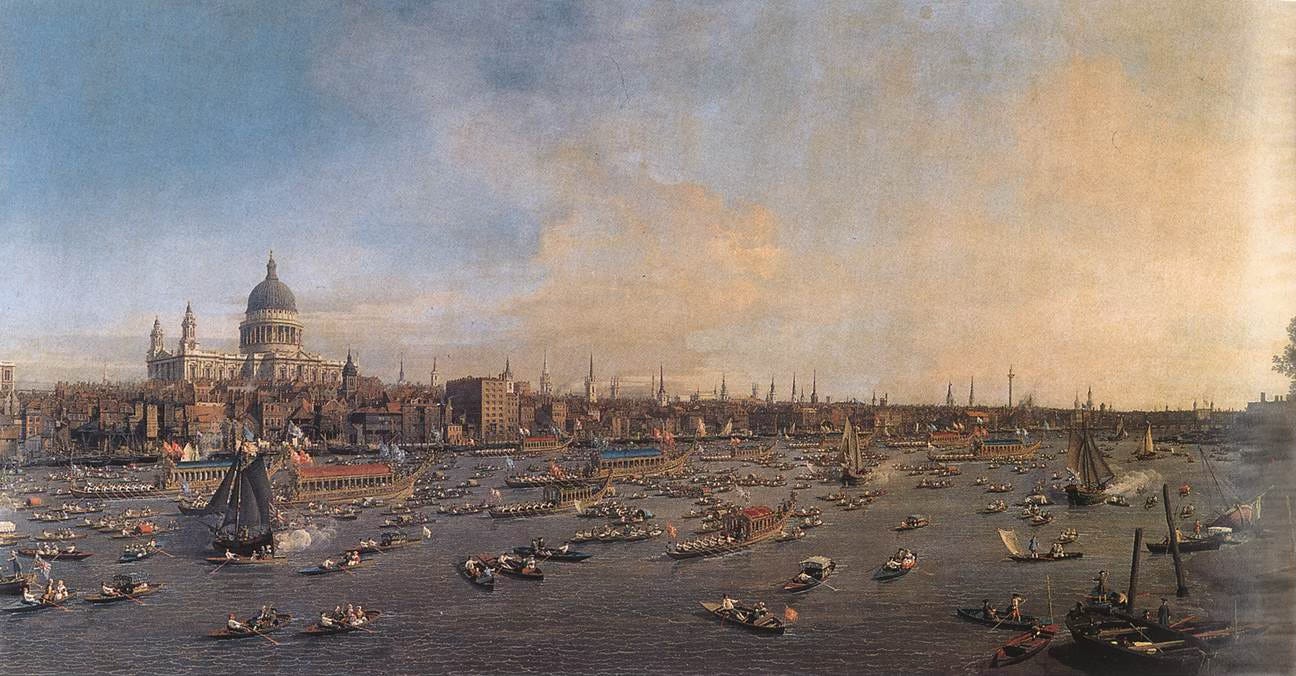
Boats on the River: Under the Ever-Changing Sky
I love Thomas Keating’s metaphor of “Boats on the River” as much as anyone; I’ve found it very helpful over the years, both for understanding my own practice and in helping others with theirs. This idea: that the water represents the stream of silent consciousness, boats on the water represent our various thoughts, feelings, etc. and our job is to simply let the boats float down the river, is elegant and practical. The instruction “don’t get on a boat!” is as helpful as it is whimsical, because there is always the temptation to get so engaged with this or that thought that we lose sight of our intention to simply watch the river.
I’m not suggesting we get rid of the boats and the river. I just propose we expand our field of awareness to include the beautiful sky above it all.
Just off the top of my head, I can draw up a list of at least twelve different ways we can experience the terrestrial sky, along with the rhythm of day and night and the weather. As you read over this list, see if you can imagine how our “inner sky” could likewise change as much, and as dramatically, as the earth’s sky.
Twilight: Whether dawn or dusk, represents a time when the sky is both beautiful and dramatic, filled with bold colors and perhaps even a planet or two twinkling over the horizon.
Sunny, Clear Sky: a clear blue sky on a sunny day is a wonder to behold. To say a day is “beautiful” often implies that radiant loveliness that seems to touch everything when the sky is bright and cloudless.
Sunny, with Cumulus Clouds: Maybe even more beautiful than the empty sky is a sky dotted by shining, luminous cumulus clouds. Strolling in the heavens like so many puffs of cotton candy, they inspire our imagination and can incite a sense of wonder.
Windy or Breezy Skies: Depending on the time of year, time of day, or incoming weather fronts, we might notice just how dynamic the wind is, rolling through the sky. Still beautiful, but a bit more dramatic.
Overcast Sky: “It looks like it’s going to rain.” Overcast skies feel dramatic and foreboding in contrast to the carefree wonder of a sunny sky. Like music shifting from a major to minor key, these skies seem somber and pensive.
Gentle Rain: The movie Singing in the Rain exploits the fact that we seek shelter from rainfall, but somehow love it anyway. The ions released by rain feel good, and of course the water nourishes the earth.
Thunderstorms: a little bit of rain might seem romantic, but a powerful thunderstorm can be a bit terrifying, or awe-inspiring. Thunder and lightning reminds us just how humble we really are.
Severe Weather: Unless you are a storm-chaser, you probably want to keep a respectful distance from tornadoes, hurricanes, or other forms of powerful weather. And with good reasons: such storms display mighty power, but can cause real damage.
Moonlit Sky: As beautiful as a sunny sky is, a night sky under the soft glow of moonlight has its own magical charm. Another “sky” associated with love and romance, and perhaps a bit of mystery.
Starlit Sky: When the moon is new, and we’re far enough away from city lights, the stars across the sky can evoke a powerful sense not only of awe, but of recognition just how little we truly are.
Northern or Southern Lights: Many people never see this spectacular celestial light show. But if you are among the lucky ones, you might see the entire firmament shimmering with colorful splendor.
Darkness: Sometimes the clouds roll in at night, and even the subtle light of moon and stars is obscured. Here is John of the Cross’s “dark night of the soul,” — an abyss where everything seems to disappear.
Contemplative practice can lead us to as many different experiences of the “inner firmament” as the sky gives us different experiences of life outdoors. Obviously, our “inner sky” may not look or feel the same as the azure chalice that cradles the horizon of our planet. The point here is not to try to imagine a “sky scene” when we settle in to silent contemplation, but rather to learn to see how whatever we may experience within our hearts and minds is no more solid or permanent than how we experience the sky outside. When we meet whatever comes our way in contemplation: whether it is an avalanche of thoughts, or graced moments of gentle serenity — with openness and acceptance rather than self-criticism or self-judgment, we are practicing hospitality to our own self, and meeting even our imperfections with kindness rather than evaluation, accusation or blame.
I hope you find this “expanded” metaphor of the boats, the river and the sky to be a helpful invitation to bring openness and gentleness into your contemplative practice. I hope over the next few weeks or months to write meditations inspired by the dynamics of the sky and the weather, to explore how contemplative practice can show up in our lives in a variety of ways. Through the metaphor of the sky, let’s explore the diversity and nuances of the experience of contemplation. I hope what emerges will be a new way to think about our encounter with silence, so that we can foster more curiosity, less judgment, and in getting to know our inner landscape better, we might also come to know the source of all silence and love better as well.

Chelan Harkin, ”The Worst Thing” from Susceptible to Light (Soulfruit Publishing, 2020), p. 28.
Laird, Martin. Into the Silent Land: A Guide to the Christian Practice of Contemplation (pp. 16-17). (Function). Kindle Edition.
Rinpoche, Sogyal. The Tibetan Book of Living and Dying: The Spiritual Classic & International Bestseller: Revised and Updated Edition (p. 12). (Function). Kindle Edition.
Ibid., p. 48.
Chödrön, Pema. Comfortable with Uncertainty: 108 Teachings on Cultivating Fearlessness and Compassion (pp. 117-118). (Function). Kindle Edition.
Thank you, so well put and accepting. I have thought so many sacred sites around the world were designed to symbolically and literally with heavenly alignments, bring Heaven and Earth together. the mountain and the Heavens, an axis mundi or omphalos. To help the seeker focus same within self for the inner journey.