

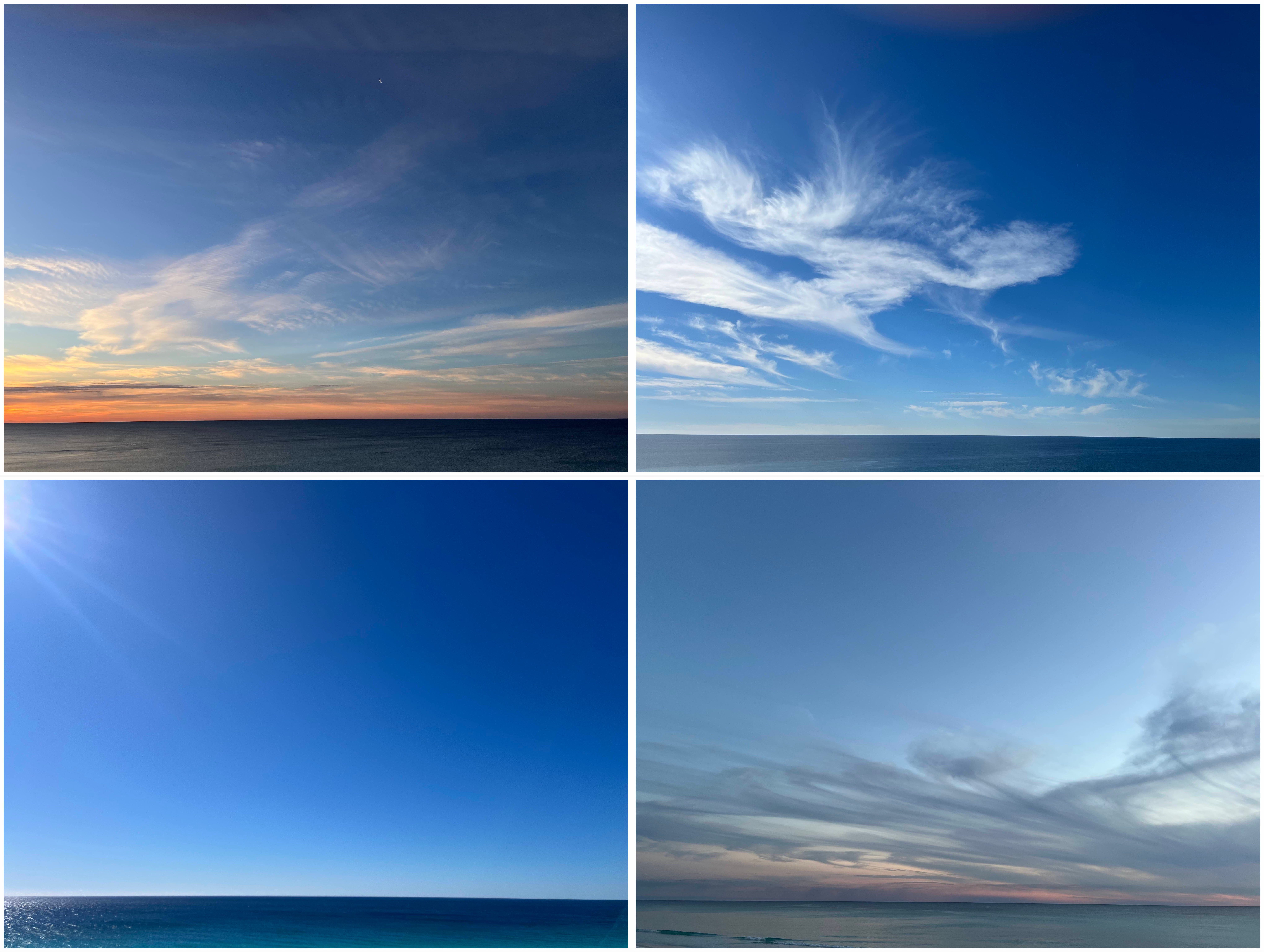
The Buddhist writer Longchenpa compared nondual awareness to the sky.
“Mind, continual source of meanings, is like the sky:
The sky is Mind, genuine meaningfulness,
Without duality, complete and identical with itself —
Understand it thoroughly straight away.”1
Longchen Rabjam Drimé Özer (1308–1364) was a Tibetan Buddhist scholar and yogi. His name literally means, “The Vast Expanse.”
He was a prolific writer and is regarded as one of the most important teachers of his lineage, the Nyingma tradition. These words come from his treatise Now That I Come to Die, his final words of instruction offered to his disciples. The sky is Mind.
It’s an image that shows up again and again among practitioners of meditation. Ambient musician Ray Lynch titled his first CD The Sky of Mind, and an anthology of Buddhist writings from the Beat generation is called Big Sky Mind. But what makes this metaphor so useful?
English composer John Tavener (1944–2013) composed a luminous setting for a beautiful Russian Orthodox liturgical text, the “Akathist of Thanksgiving.”2 Originally composed in 1929 by Metropolitan Tryphon, this hymn had been translated into English by a British Abbess, Mother Thecla. The Akathist of Thanksgiving is filled with beautiful imagery celebrating the glories of the natural world — including these lines:
You led me into this life, as an enchanting paradise.
We saw the sky as a deep blue chalice
In whose azure rings out the song of birds.
We heard the peace-making noise of the forest,
And sweet-sounding music of waters;
We ate fragrant and sweet fruits and scented honey.
It is good in your home on earth, joyous to be your guests.
This striking way of seeing the sky brings together the Eucharistic heart of contemplative Christianity with the vast, spacious, serene view of Buddhist teachings on meditation. When we tend to our interior silence, we enter into a sacred awareness similar to how going outdoors places us in the sky — in the “deep blue chalice.”
One way meditation is like the sky: the “weather” can vary from day to day (or from hour to hour). Sometimes it is quite cloudy, or stormy, or foggy, or dark. At other times it can be luminous and glistening. We learn to love the sky however it may be — twilight or stormy skies can be beautiful in their own way, just as a bright sunlit “blue chalice” is glorious to behold. There’s no point in getting grumpy when the sky is overcast (although I know we all do it from time to time); it’s better to accept and embrace the unique beauty of the sky just as it happens to be at the present moment.
Doesn’t the silent attentiveness of contemplation work the same way? In other words, sometimes our minds and hearts are “sunny” or “cloudy” or “stormy” — sometimes brilliant, or dark as night, or mellow like the twilight. And while it might be human nature to desire the bright clear sky and chafe against all the other “weather conditions,” anyone seasoned in a practice like Centering Prayer learns that it is best to appreciate whatever is present, however spacious or turbulent the experience might be. When we rely on the sacred word and a sense of trust that it cultivates within us, we know that it might open us to a deeper and clearer silence at any time.
The experience of contemplative silence is an encounter with the interior sky. It can be simply a symbol for the quality of consciousness at any given moment, or it can also be a beautiful blue symbol of the chalice of divine presence. Personally, I’ll take both of these ways of receiving the spiritual metaphor of the sky. Like Longchenpa, I’ll seek to “understand it thoroughly straight away” so that my inner landscape might be more open, available, and conducive to the fruit of deep prayer.

Longchenpa. Now That I Come to Die: Intimate Guidance from One of Tibet’s Greatest Masters, (Kindle Edition), p. 37
Akathist is a Greek word that means “Without sitting,” akathist hymns were traditionally sung while standing.