

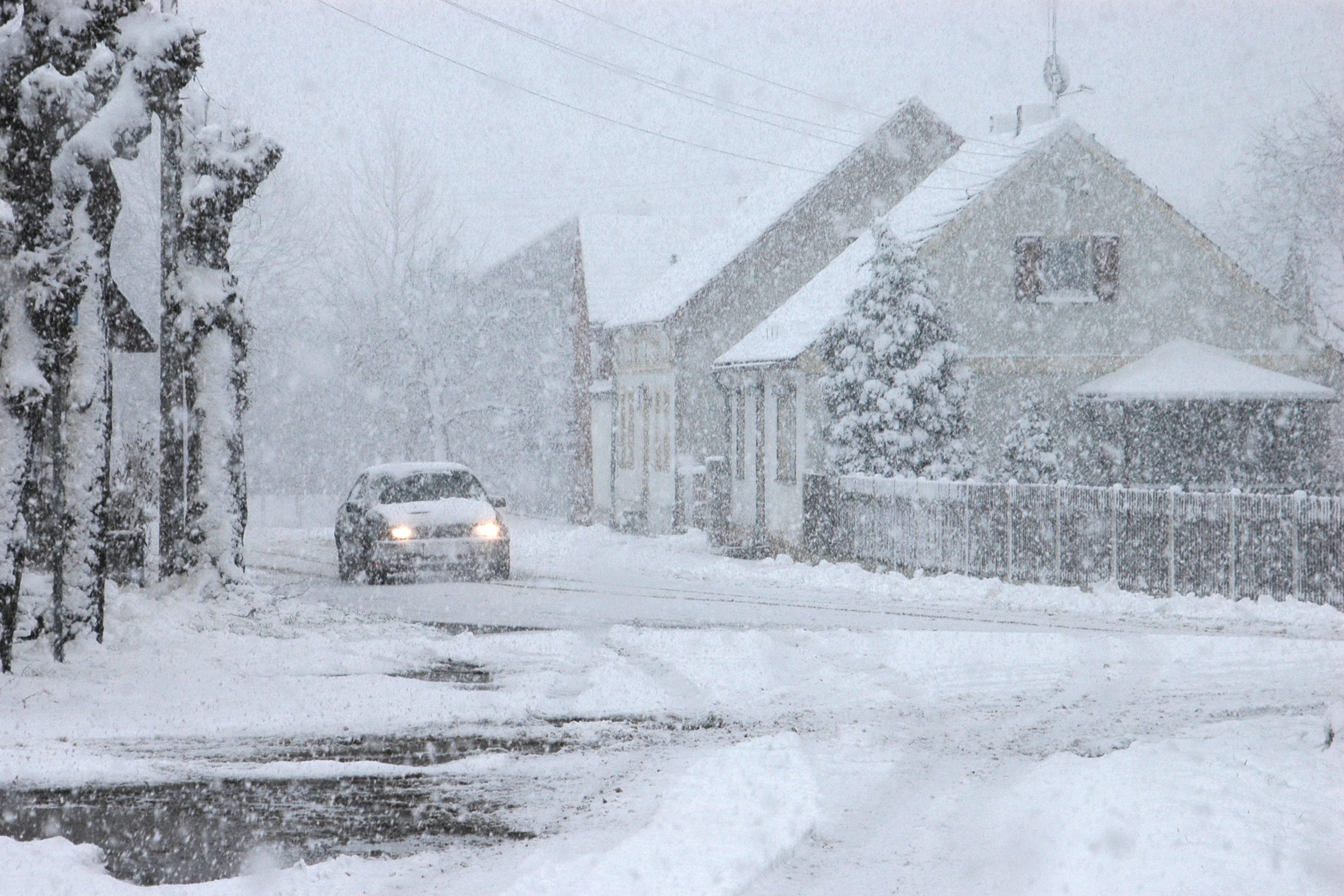
I live in Georgia, and like much of the eastern half of the United States, we are hunkering down in anticipation of the major winter storm coming our way this weekend. As I write these words on Friday evening, it’s about 45° Fahrenheit, currently no precipitation. The highs over the next week will remain in the mid 40s and will dip as the week progresses, but the nighttime lows will be tough for us southerners: sub-freezing temperatures every night of next week. Brrr!
Yes, I know the winter weather will hammer states to the north of us far more severely. I pray everyone stays warm and safe. But storms like these are challenging to navigate because they bring extreme weather relative to what is normal for any given region. Here in Georgia, late January temperatures tend to be in the 35-55° range, so this will be noticeably cooler than normal. For all of you northerners who might be tempted to sneer at us, remember that we don’t have the clothing or the road equipment to make navigating a winter storm more manageable.
As I’m writing these words, I realize that the real topic here is not the weather at all, but suffering. When a burden seems greater than what we’re used to, we naturally suffer. If you have the right clothes — and your city has the right equipment — then weathering a winter storm is manageable, and perhaps even enjoyable (if you love winter sports like skiing, then naturally you’ll love winter snow much more than most). But without proper preparation, suffering is the natural consequence.
As best I can tell, no one likes to suffer. Even people who explore pain and suffering for erotic purposes (i.e., members of the BDSM community) prefer to keep it tightly controlled, with “safe words” agreed upon to make sure the suffering never gets out of hand. But while such careful limits might work in consensual erotic contexts, the pain that comes with the territory of being human cannot be managed so neatly in the wilds of real life.
No one can plan just how much suffering will come to us at any point in our lives, or how to minimize or mitigate real suffering when it does come to call. In his writings, contemplative author Martin Laird refers to the experience of depression as having an “uninvited guest” in one’s life. Just because we do not invite suffering into our hearts and our lives does not mean that at some points of our lives, suffering will show up anyways.
So what do we do about it?
We can be like Dylan Thomas and “rage, rage against the dying light” — refusing to acquiesce to the sting of suffering. But that is no guarantee that suffering will disappear; on the contrary, our efforts to fight suffering might have the unfortunate consequence of just making it worse.
Then there is Jesus, who seems to counsel a kind of gentle acquiescence in the face of life’s normal suffering. “Blessed are the meek,” “Blessed are those who mourn,” “Take up your cross and follow me” — in other words, when suffering comes, don’t fight it, don’t resist it, simply accept it and allow it to (if possible) teach us, and perhaps even bless us.
This harmonizes nicely with the teachings of the Buddha, who felt that suffering was ubiquitous — and that the way to alleviate suffering is to loosen our attachment to desire, including the desire to end suffering itself. By contrast, when we begin to understand that every human being must endure some measure of suffering, we can therefore try to be more philosophical and gently accept that this, too, is a part of life: and such acceptance can be a real key to the experience of suffering being mitigated.
Suffering never lasts forever (if suffering is too much to bear for now, tomorrow or at some point in the future we can trust that suffering will be alleviated). This impermanence of physical sensation (really, of all things) can seem cold or harsh when we are facing the impermanence of things or people or experiences we love, but the impermanence of suffering or pain seems like good news indeed. Christianity typically does not emphasize impermanence as a positive value, but musing on the impermanence of life and all things is both consistent with the Bible’s message that only God is perfect and permanent, as well as also helping anyone caught in the thrall of ordinary human suffering to find hope in trusting that tomorrow will be different.
Most people who dive into Christian spirituality, it seems to me, want something more than just a vague assurance that since nothing lasts forever, we can expect to outgrow our suffering. But that “something more” often is just a posture of trusting that God will, in the end, wipe every tear from our eyes. I for one am willing to let my expectations of God be modest. I don’t expect God to magically wipe away all my pain and sorrow.
But I do expect God to love me and care for me, even when I’m suffering. And that love and care proves to be everything I need to live my life shaped not by suffering, but by joy.

My haiku for this weekend:
Winter storm cometh
We plan; the storm laughs
Ice storm!