

Did Thomas Merton teach Centering Prayer?
On the surface the answer is “no” for Centering Prayer first emerged in the 1970s, after his death. The guidelines for Centering Prayer was prepared by several Trappist monks (most notably William Meninger) and based on teachings found in classic contemplative writings like The Cloud of Unknowing.
But like an old Facebook relationship status, we could say of the connection between Merton and Centering Prayer: “It’s complicated.”
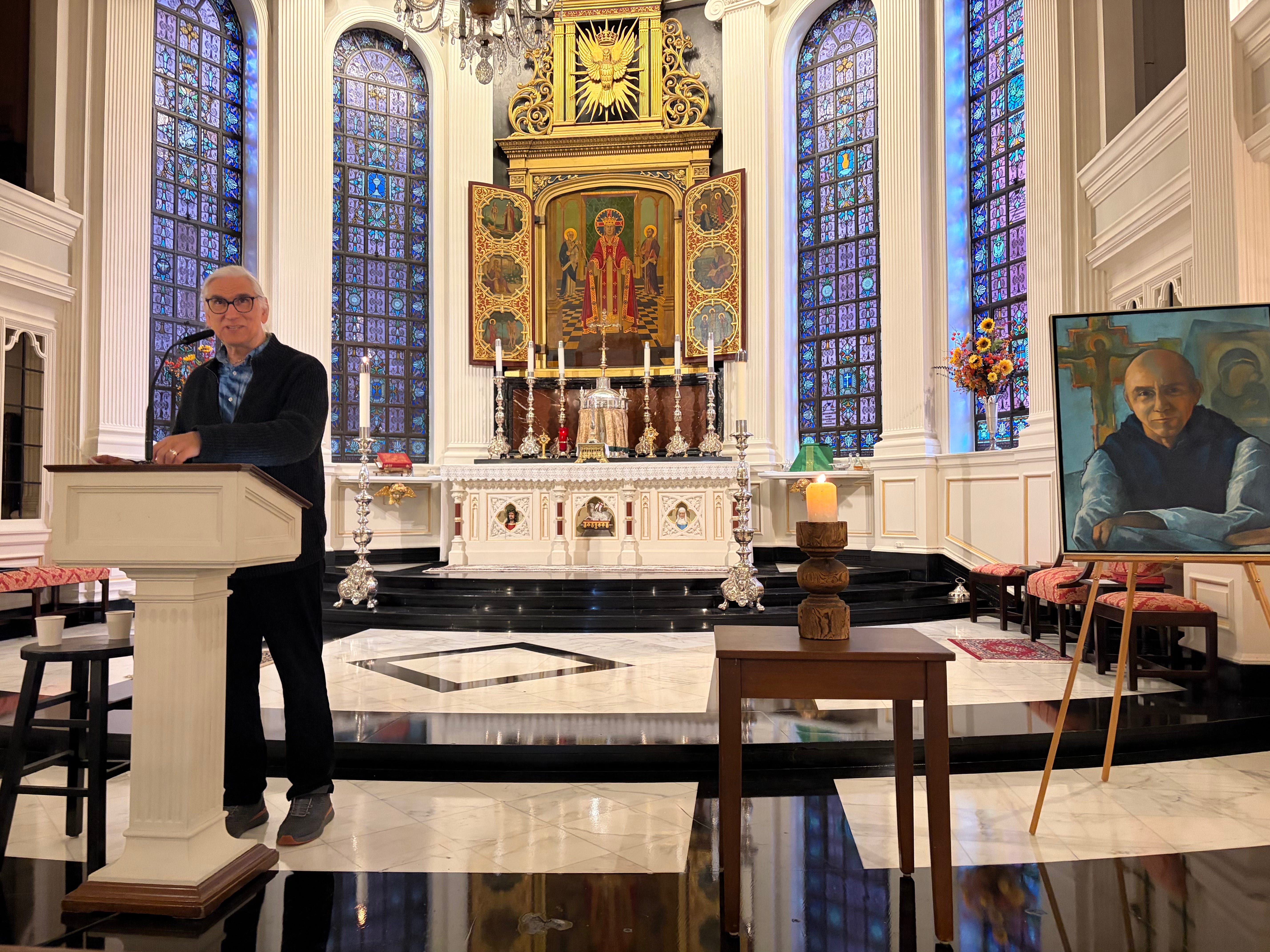
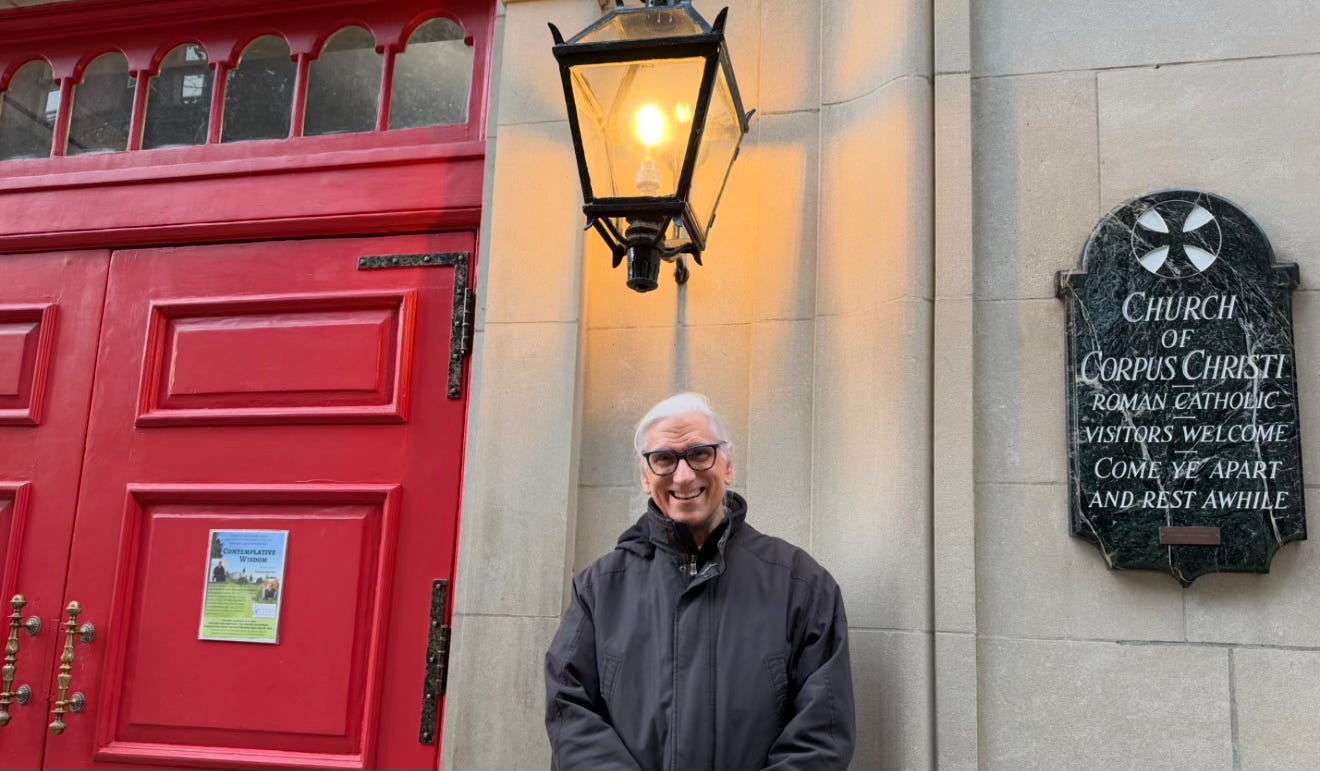
This past weekend I had the honor of leading a day of reflection on Thomas Merton’s teachings on contemplation for the chapter of the International Thomas Merton society that meets at Corpus Christi Church in Manhattan — the church where Merton was baptized in 1938.
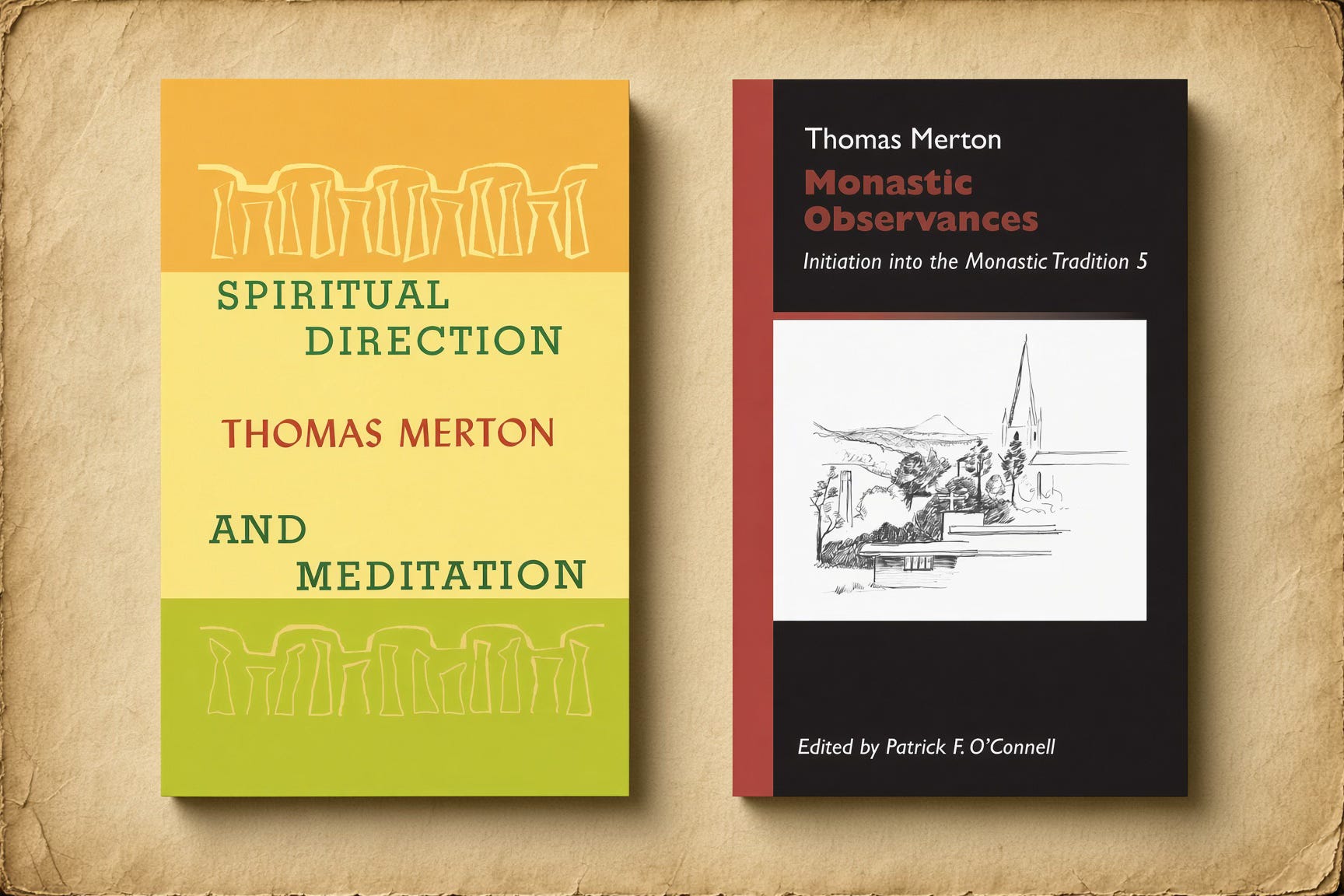
As I prepared for the talk, I discovered the following nuggets in his writings, all drawn from two sources: a pamphlet he wrote in the early 1950s called Spiritual Direction and Meditation and some of his lesson plans from conferences given to young monks in the monastery, posthumously published as Monastic Observances. Taken together, they do seem to indicate that Merton’s approach to meditation, while steeped in the kind of cerebral Catholic piety that was common before Vatican II, was increasingly open to the kind of radical attentiveness and deep silence that forms the ground for Centering Prayer (and other practices that emerged after Vatican II).
May these words of wisdom inspire your daily spiritual practice.

Meditation is really very simple and there is not much need of elaborate techniques to teach us how to go about it.1

Our prayer becomes a semi-passive yielding to grace in obscurity, a consent given without reserve and without hesitation to the action of God Whom we do not see. By this consent, and this yielding, we surrender the very depths of our being to God. He in return surrenders Himself to us in an ineffable way, in this same act of loving trust, an embrace in the darkness of loving faith.2

Repetition … or the slow recital of a vocal prayer or psalm {may be used}—or the Our Father: repeat the words slowly, pausing where you feel drawn to pause, and deepening the effect of the words, adding more faith and love to your thought on them. The “Jesus Prayer” (“Lord Jesus Christ, Son of God, have mercy on me a sinner”), in conjunction with slow, regular, deep breathing {is a similar method}.3

The most important thing is to seek silence, tranquillity, recollection and peace.4

In this prayer, rather than finding sweet silence and peace within ourselves, we lose ourselves entirely; we lose touch with any point of reference that would make the experience fully intelligible to us. Light is grasped in a supreme unknowing, in which there seems to be no longer any knowing subject, but only ‘truth,’ ‘wisdom,’ or better still, reality itself.5
Simplicity; consent; repetition; silence; unknowing. Taken together, these five nuggets of instruction from Thomas Merton seem to point, if not to the direct practice of Centering Prayer, then at least to the habitat of adoring silence where practices like Centering Prayer naturally thrive. Did Thomas Merton teach Centering Prayer? Whatever you want to call it, he promoted silent loving meditation.
May we all find the time and desire to integrate such meditation into our daily lives.

Spiritual Direction and Meditation, page 77 (Kindle edition).
Monastic Observances, page 135 (Kindle edition).
Monastic Observances, page 132 (Kindle edition).
Spiritual Direction and Meditation, page 84 (Kindle edition).
Monastic Observances, page 128 (Kindle edition).