

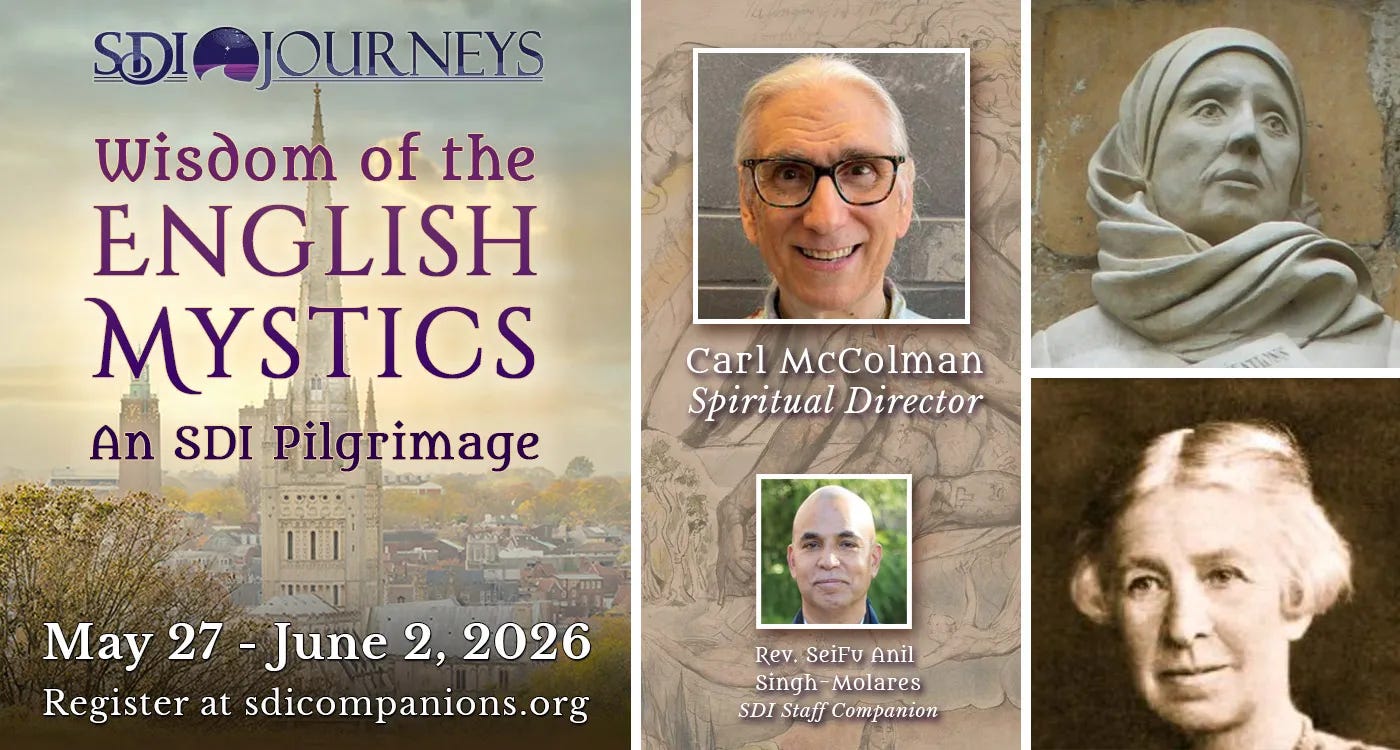
From May 27 to June 2 I had the incredible honor of being a facilitator for a pilgrimage sponsored by SDI (Spiritual Directors International), the largest interfaith association of spiritual companions, directors and guides (and those who work with them). Our pilgrimage was called “Wisdom of the English Mystics” and while we considered the wisdom of several wonderful English contemplatives, from William Blake to The Cloud of Unknowing to Kenneth Leech, our week together was centered primarily on three renowned figures from the English mystical tradition:
C. S. Lewis, the Oxford professor whose children’s fiction contained luminous invitations into what Richard Rohr calls “learning to see as the mystics see”;
Evelyn Underhill, the amateur scholar of mysticism who became a gifted spiritual director and one of the leading figures in the 20th-century contemplative revival;
and Julian of Norwich, the medieval woman who experienced visions of Divine Love, and embraced a life of solitude where she wrote her mystical masterpiece.
Each of these figures is respected as an important literary or scholarly figure in addition to being known as a mystic or spiritual writer. Lewis hosted the Inklings, the literary club that amplified not only his work, but the writing of several renowned authors, especially J.R.R. Tolkien. Julian of Norwich, meanwhile, is widely regarded as the first woman to have written a book in the English language, while Underhill is credited with being the first woman to lecture on theology at Oxford.
To spend a week in London, Oxford, Pleshey and Norwich, walking in the footsteps of these great mystics, was in itself a tremendous experience. But to do that in the company of 25 amazing spiritual directors and companions, all of whom share my interest in contemplative spirituality, mysticism, and the care of souls, was practically a transcendent experience in itself.
C. S. Lewis and The Kilns
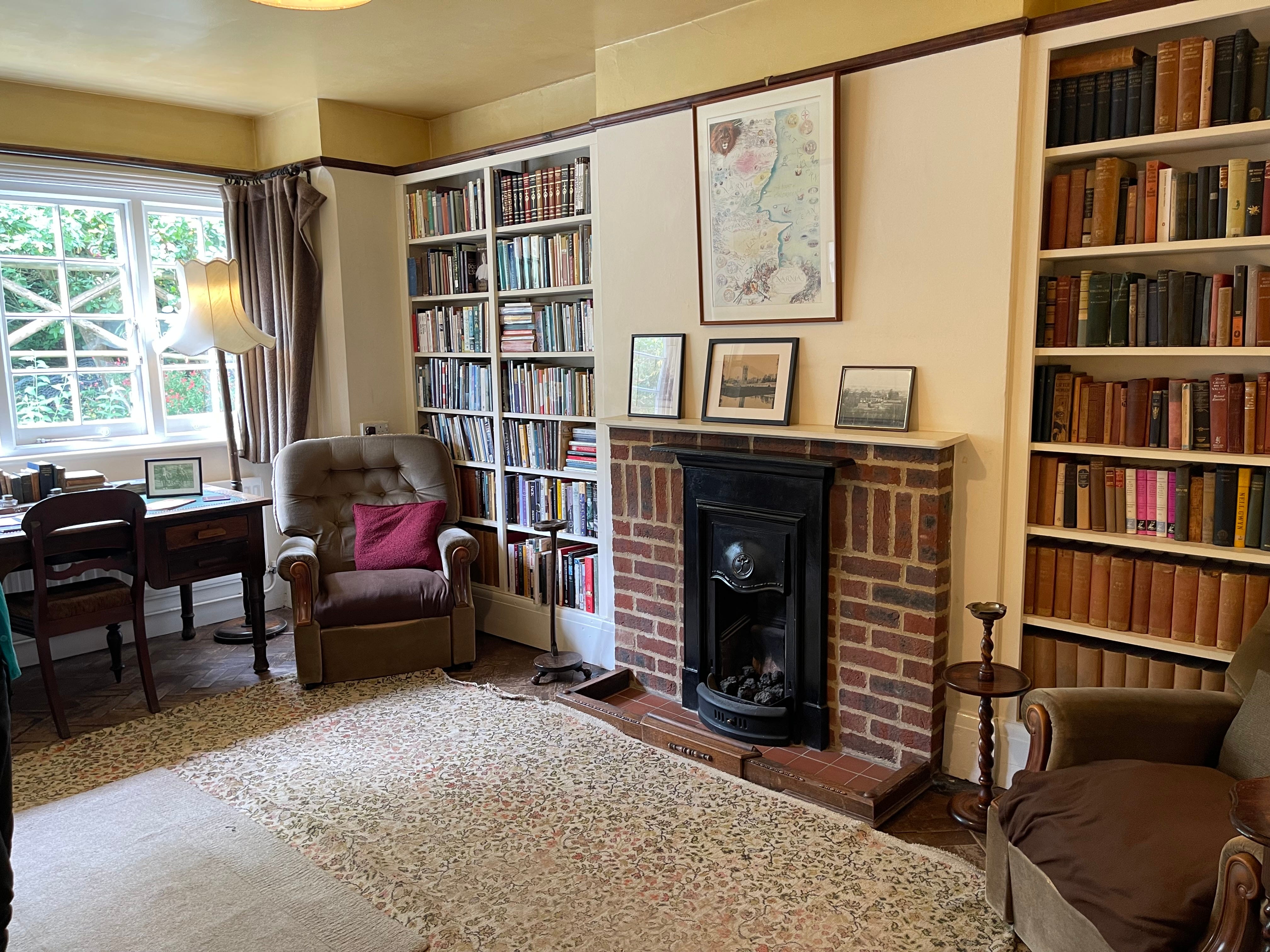
After a couple of days touring sites like the Tate Britain Gallery and the British Library, our pilgrimage took us to the university town of Oxford for the first of our three major destinations: the Kilns, a beautiful old home located a couple of miles outside the city center, which Lewis and his brother purchased in 1930 and where they remained for the rest of their lives. The house was sold following W.H. Lewis’s death in 1973, but now is owned by the C. S. Lewis Foundation, where in addition to accepting visitors two days a week, the house hosts scholars from around the world.
I feel like I should say something about why C. S. Lewis got included in a tour on the English mystics. Lewis himself would not have been happy about, or comfortable with, the idea of being called a mystic. He said that mystics were like mountain climbers but he was a person “of the foothills.” I admire his humility, and I acknowledge that he and I may have a different understanding of what it takes to be a mystic — but as Kenneth Leech once told me, rather than deciding for ourselves to identify as a mystic (or not), it’s better to quietly live our lives, and leave the label for others to apply (or not).
So I am happy to call Lewis a mystic, despite his humble protestations to the contrary. I recognize the mystic in Lewis not because of his nonfiction writing (I often find his theology to be overly simplistic in places, dismissive of important concerns, and too limited by the biases of his age), but because of his fiction, where the sparkle of mythical thinking takes center stage over the dryness of debate.
Books like Perelandra and Till We Have Faces seem to glow with a kind of otherworldly beauty, whereas several of the Narnia books — especially The Voyage of the Dawn Treader — positively shimmer with their poetic descriptions of silence, divine love, and a transfigured life. Lewis may not be the greatest of mystical theologians, but he certainly deserves acclamation as a mystically inspired storyteller. Plus, he corresponded with Evelyn Underhill, and read Julian of Norwich. He embraced mystical theology before it became the fashionable spirituality that writers like Thurman, Merton, Rohr and Bourgeault have made it for our time.
A young scholar in residence gave us a tour of the Kilns, highlighting not only Lewis’s achievements as a professor and writer but also many amusing anecdotes that revealed what a compassionate and caring person he was, especially to friends but also to animals and to the many people who corresponded with him. I think I’ll still argue with his theology when I sit down to read him, but I have so much more respect for someone who truly tried to put his spiritual values into practice.
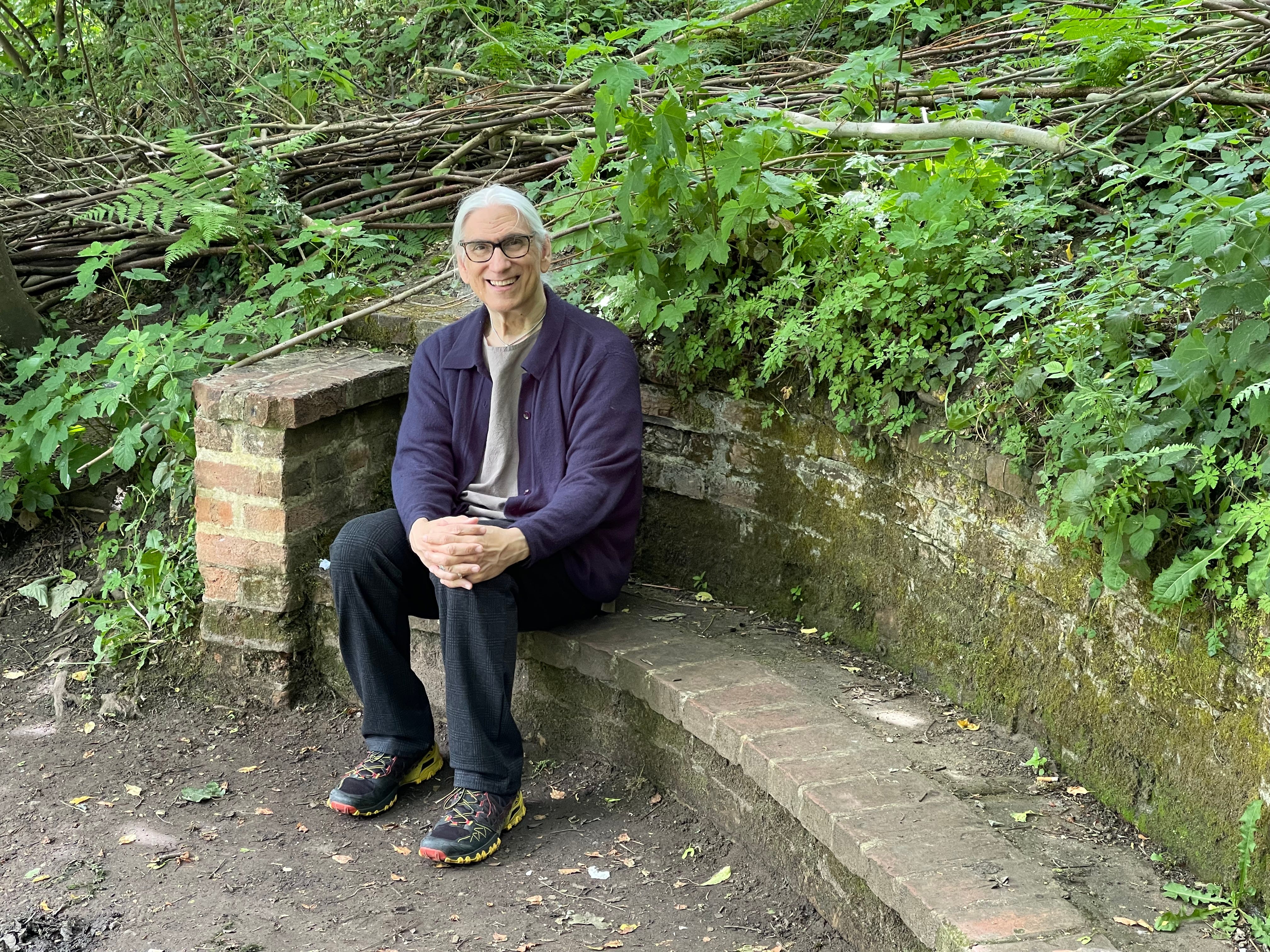
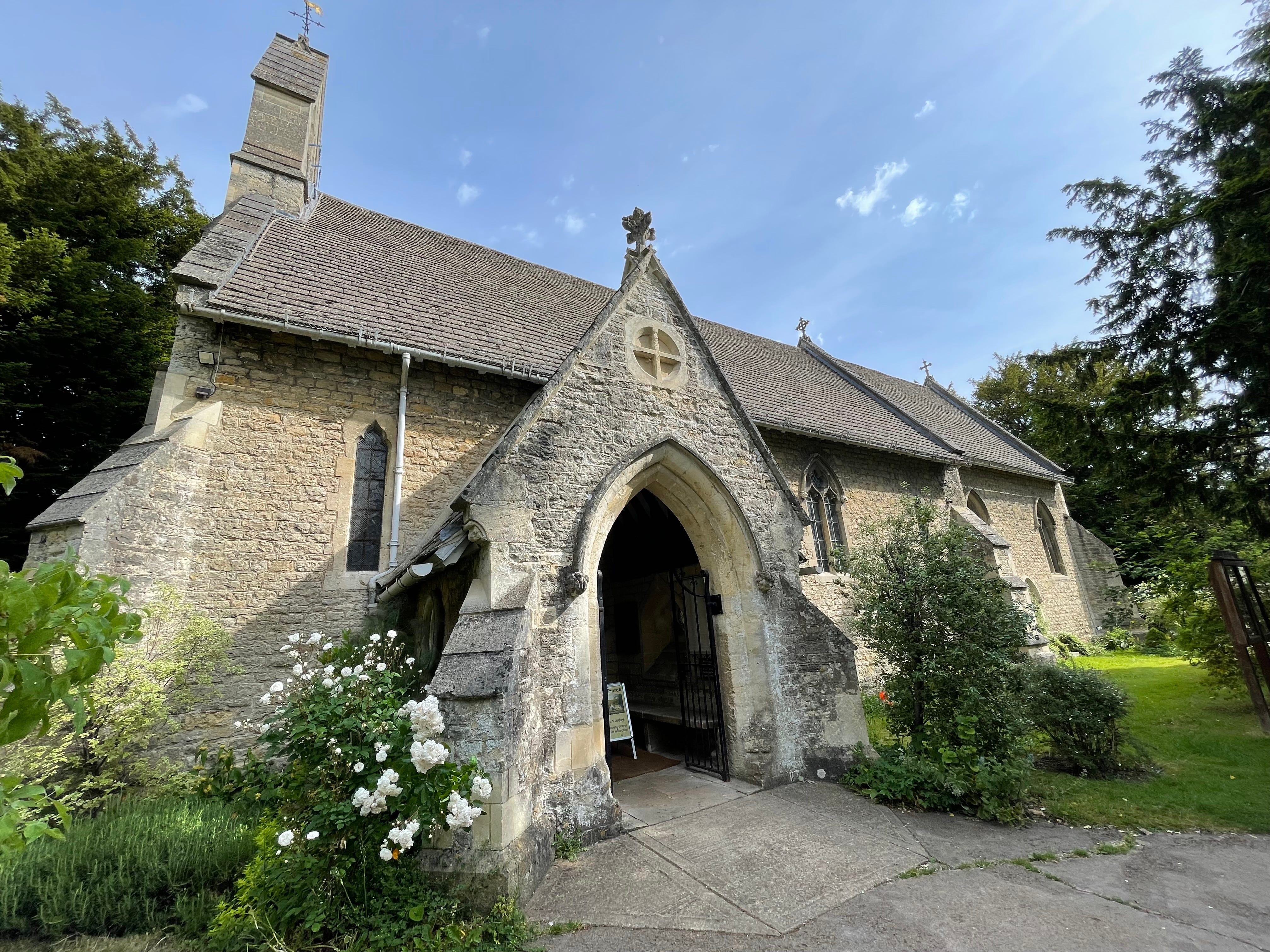
In addition to touring the Kilns, we spent time at the C. S. Lewis Nature Preserve (where I had a chance to rest on a bench by the pond where it is said that Lewis and Tolkien would sit together and visit), and stopped by Lewis’s church, Holy Trinity Headington Quarry, where we paid our respects to his gravesite. Ironically, he’s buried with his brother, not his wife (she had been cremated, although her ashes were also interred there). His simple tombstone makes no reference to what an important voice he was in the annals of 20th-century spirituality.
Evelyn Underhill and the Pleshey House of Retreat
After we departed from Oxford we crawled our way through exurban rush hour traffic to reach the northeast side of the city, heading toward an Essex village called Pleshey, 35 miles northeast of London — population about 300! At the center of this one-street hamlet is found the Chelmsford Diocesan House of Retreat — a former convent that was turned into a retreat house back in the 1920s. Almost from its beginning, it became a favorite site for Evelyn Underhill to make her personal annual retreat, but also where she would lead one to three retreats each year, until her health began to fail in the late 1930s. Pleshey remains in use as a retreat center where people come for days of rest, renewal, reflection, and contemplation. We were there for an entire weekend, so it functioned for us like a little retreat within a pilgrimage. Overseas travel can be stressful, even when the topic is spiritual. Thankfully, we pivoted away from the temptation to rush from this event to that attraction, instead taking a pause so we could truly take time to “be still and know.”
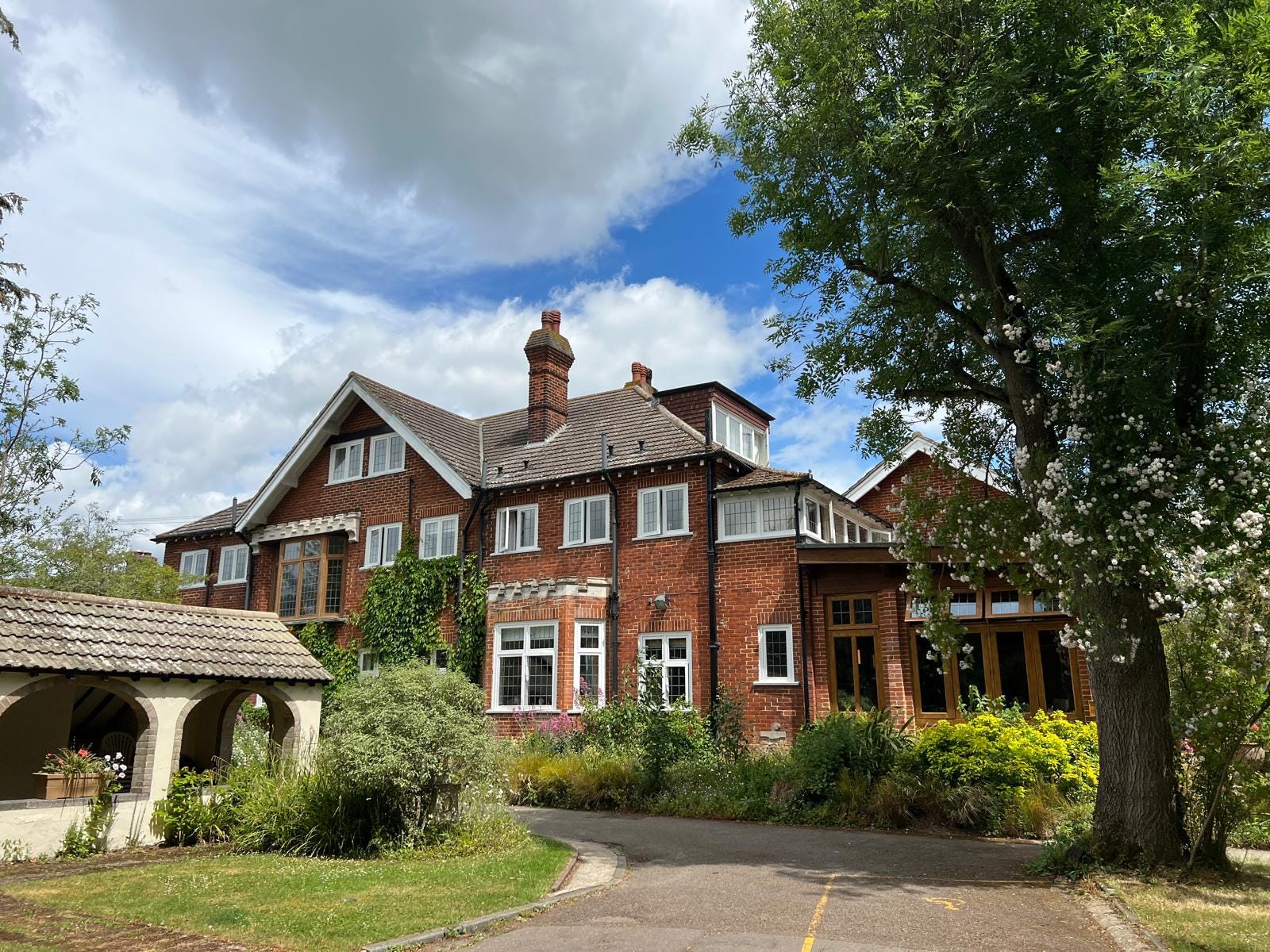
Pleshey is a charming facility in a spectacular setting. It was wonderful to be there at the height of spring, although I suspect its beauty would shine any time of year. The song of blackbirds, wood pigeons and other winged ones was so loud, and musical, in the mornings that no alarm clock was necessary. The gardens, lush and slightly unkempt in the best English country garden way, were colorful with a variety of blossoms, and filled with butterflies, rabbits, and even a couple of pheasants running around. The village of Pleshey was itself charming, the people friendly, and the surrounding farmlands lush with growing wheat. More than one member of our party declared Pleshey to be a “thin place,” borrowing the Celtic idea that some sacred places are so resonant with the divine presence that it seemed the veil separating earth and heaven is, in this place, quite thin.
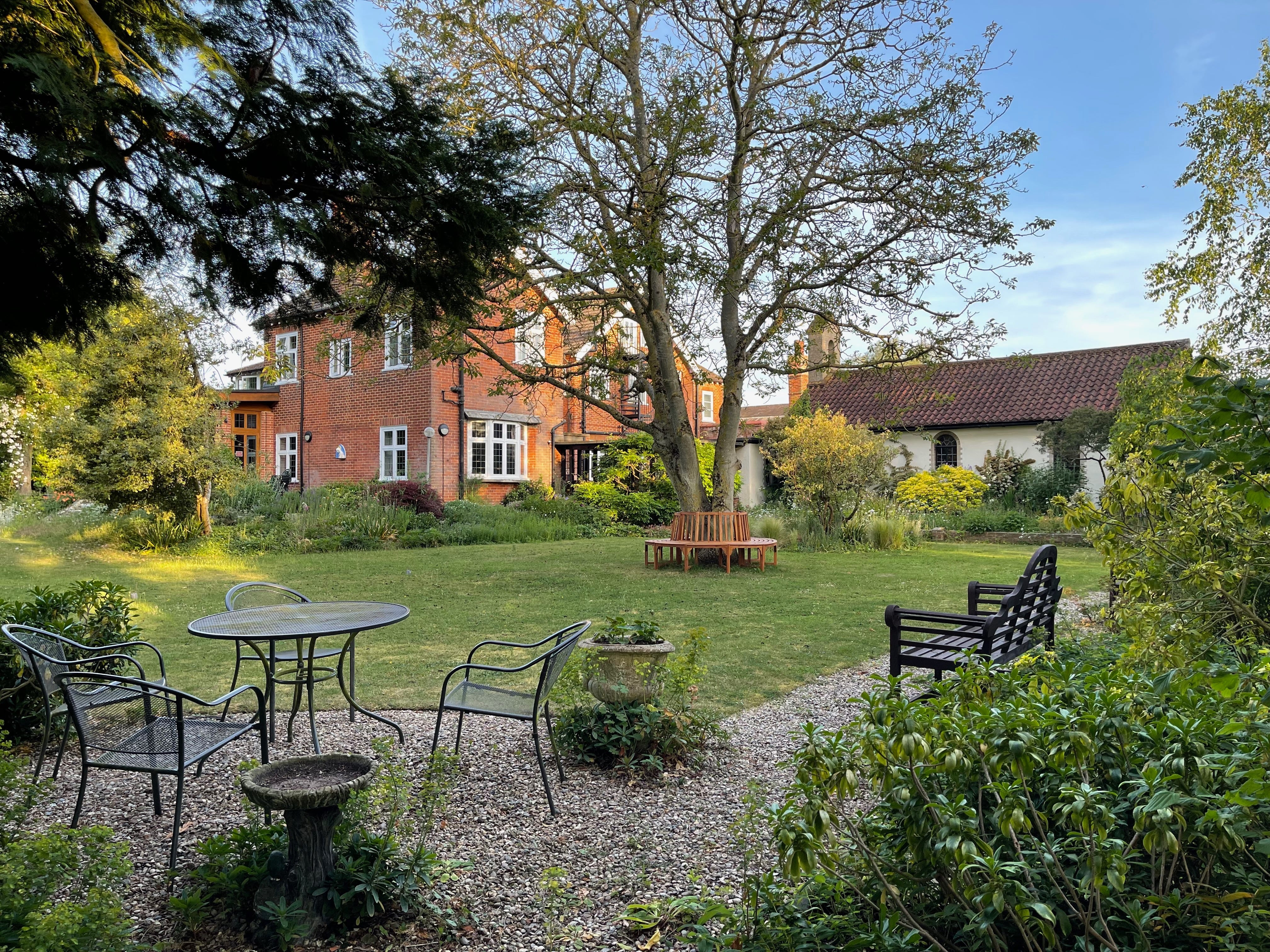
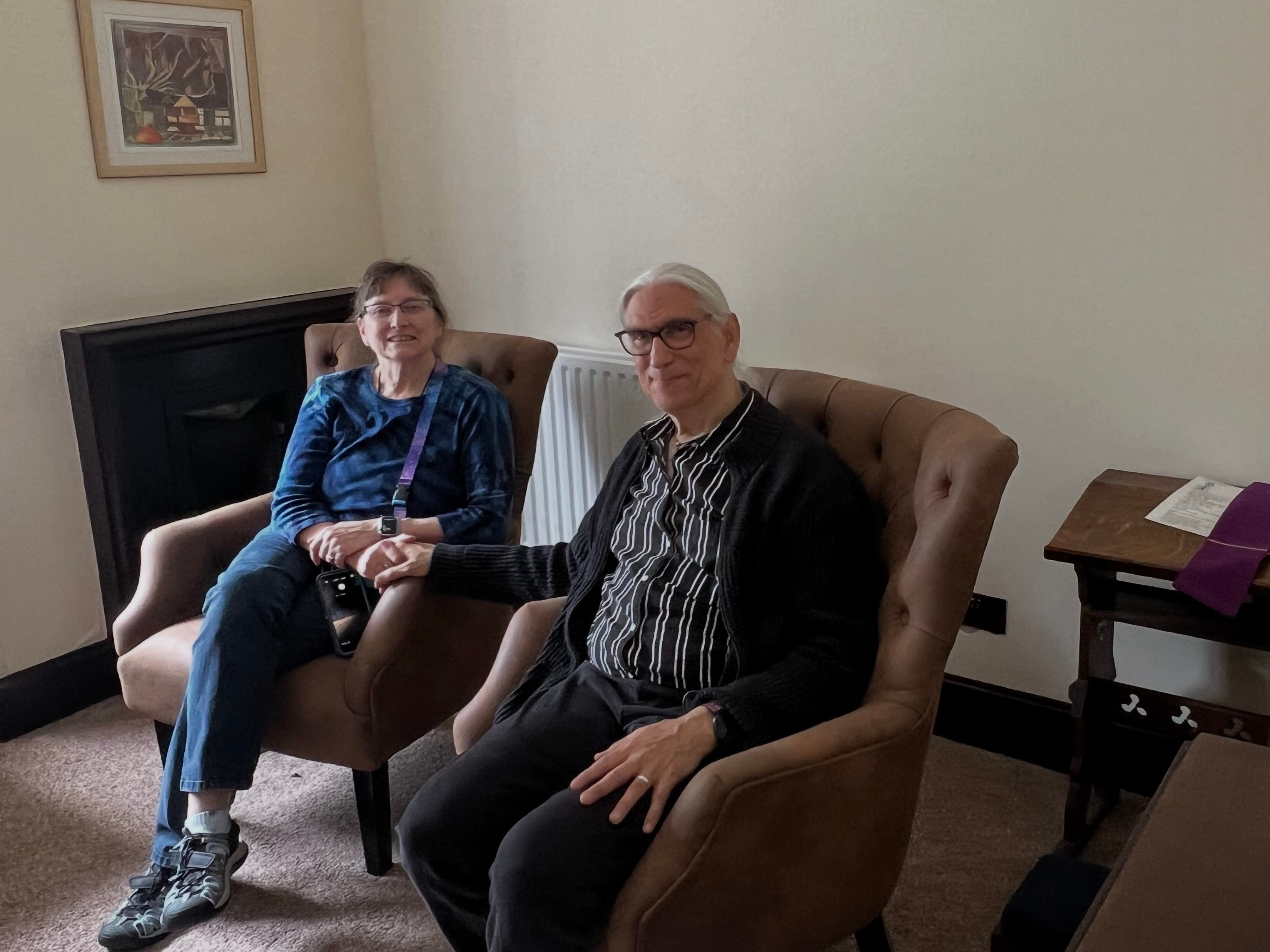
Of course, we were there not just to make a retreat, but to walk in the footsteps of the great English writer, spiritual director, and retreat leader, Evelyn Underhill. The spirit of her long relationship with Pleshey was very much evident: several of her notebooks were housed in the Retreat House Library, along with a framed needlework of the word “Eternity” that a friend did for her, and she kept on her writing desk at her home in London. Especially meaningful to me was learning from the Retreat House warden where Underhill herself would most likely have met with others for spiritual direction and companionship during her times at Pleshey. Like the Kilns, the furniture of course is different from what would have been there 90 years ago; still, it felt especially meaningful to sit in that room with my wife, two spiritual directors who have been so inspired by the woman who walked there a century before us.
Evelyn Underhill is not as renowned or celebrated an author as C.S. Lewis or Julian of Norwich, especially outside of contemplative circles. At first I was nervous that the pilgrims on the retreat might have found this site boring rather than restful. That fear was unfounded: for the feedback I received from the participants made it clear that we all drank deep from the waters of contemplative silence so richly offered to us during our short stay there.
Julian of Norwich and the Julian Shrine
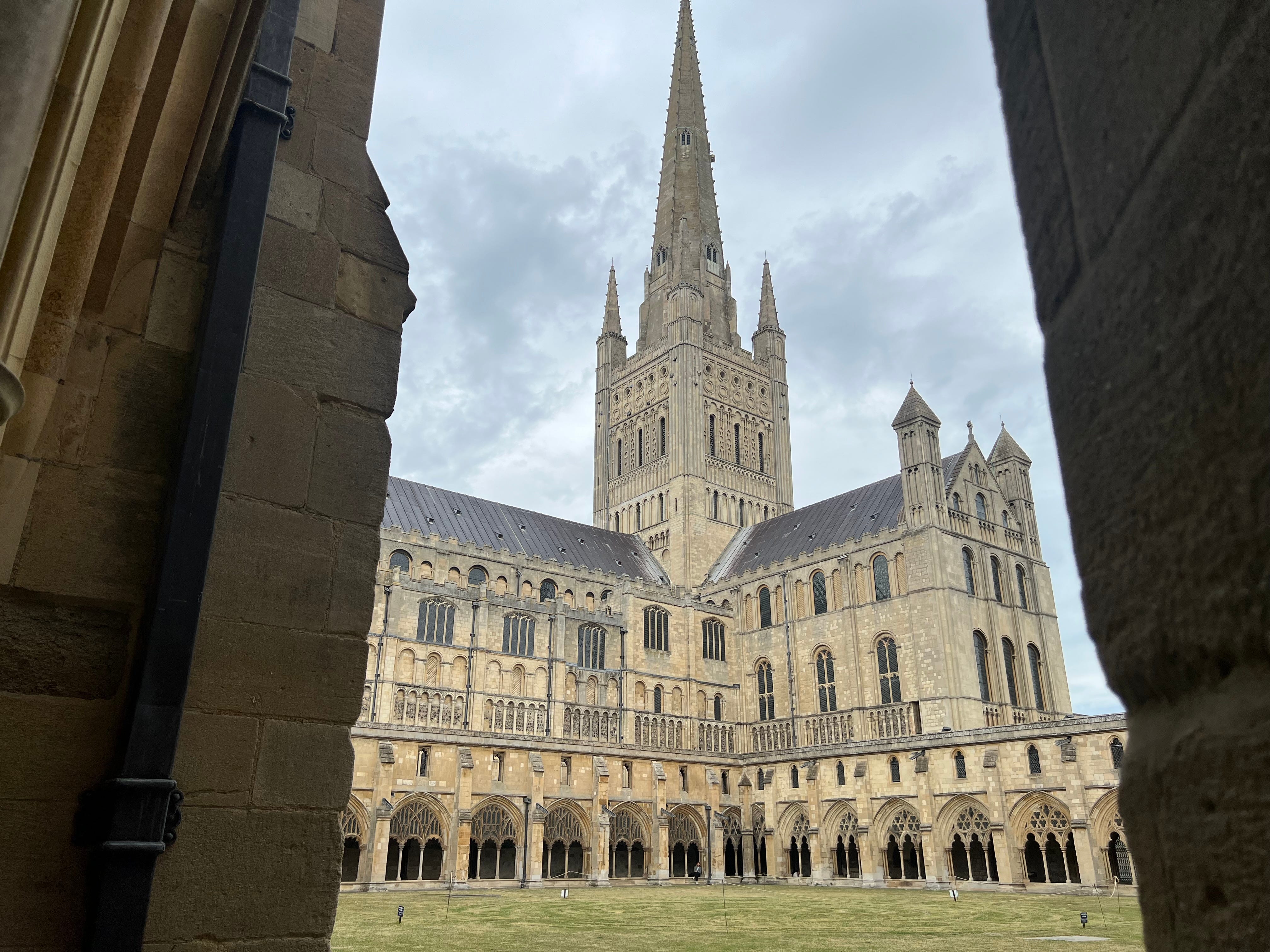
From Pleshey our pilgrimage headed northeast to the city of Norwich, a bustling community with a long history (the church associated with Julian of Norwich, for example, was first established around the year 900 CE). Remnants of the walls that protected Norwich in the Middle Ages can still be seen, and of course the skyline is dominated by the high spire of Norwich Cathedral, reaching almost 100 meters high (only Salisbury Cathedral among English churches has a taller spire). Even though we would tour the magnificent 12th century cathedral ourselves, for us the true heart of Norwich’s spirituality would be found in a much humbler site. About a mile away from the cathedral, along an unassuming side street, stood the ancient church of St. Julian, where in the late 1300s a woman lived after receiving a series of mystical visions while ill in May 1373. Some scholars have argued that “Julian” is not her real name, but simply the name of the church where she lived and wrote; although the young docent who welcomed us to the shrine argued that the current trend among Julian scholars is to accept that the woman herself was called Julian, just like the church (which took its name from an obscure French bishop).
No matter what her name may have been, we know for sure that she was a mystic who received spectacular visions. She was a gifted writer who wrote about the spiritual meaning of those visions with eloquence and verve, and a spiritual guide whose insights into the nature and beauty of Divine love remain meaningful and relevant today, more than six centuries after she died.
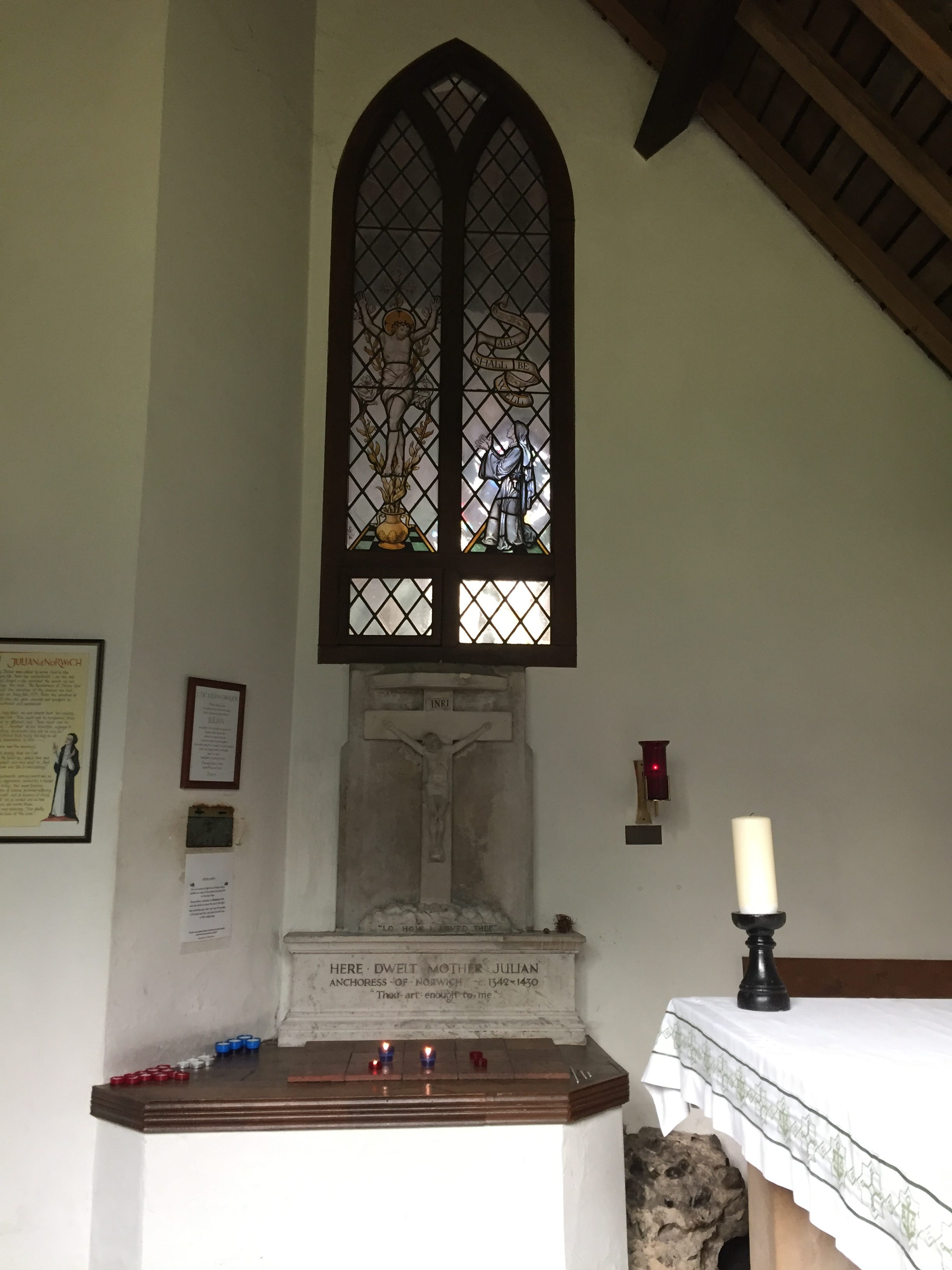
Julian was an anchoress — a technical term meaning a woman (the men were called anchorites) who lived a solitary life in a cell attached to a church, where they would dedicate their lives to prayer but also to work in service of the community — like spiritual direction, offering a listening ear and discerning words to those who came in search of their counsel. We know that Julian was a wise spiritual director because another mystic of her time, Margery Kempe, wrote about Julian’s skill as a guide of wisdom and insight.
Julian received her visions in the spring of 1373, and wrote her book probably in stages over the next fifteen to twenty years. It is filled with nuggets of wisdom, such as “the fullness of joy is to behold God in all,” “I saw no wrath in God,” “prayer unites the soul to God,” “as truly as God is our father, so is God our mother,” and the line for which she is most famous: “All shall be well, and all shall be well, and all manner of things shall be well.” These are words of trust and optimistic hope from an ordinary person who lived through five or more outbreaks of the deadly bubonic plague during her lifetime (it is estimated that as many as 1/3 to 1/2 the population of Norwich died during the worst of the plague visitations). Clearly, Julian refused to let the horrors of temporal disease shake her undying trust in a love that is greater than the things of the earth. May she be an inspiration to us all.
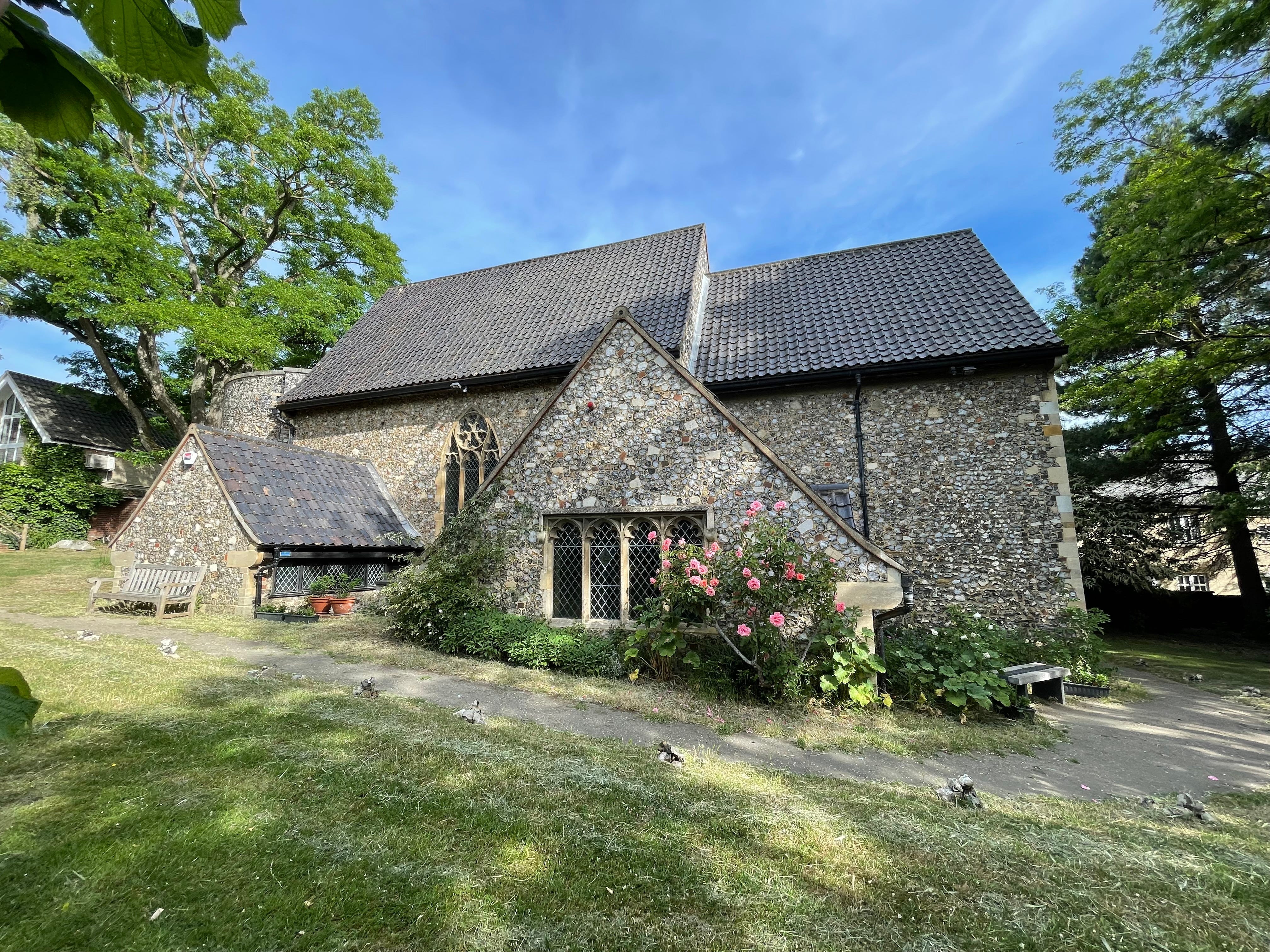
The little church of St. Julian is tiny: our group of pilgrims almost single-handedly filled up the main worship space, and we had to take turns visiting the shrine room, built after World War II on the site of Julian’s cell so many centuries earlier. Although such a site seemed humble and just tucked away in the midst of a busy modern city, it still carried an unmistakable aura of silence — and those who have read Julian’s deeply mystical words know that a profound message came out of that confined space. I have read her book numerous times over the past forty years, and I still get new insights each time I revisit her words. If you don’t know Julian’s Revelations of Divine Love, check it out. Her writing is very much shaped by the medieval age in which she lived. But underneath her historical voice is a timeless message of love and hope and possibility. And these are the qualities that all forms of mystical spirituality call us back to, again and again.
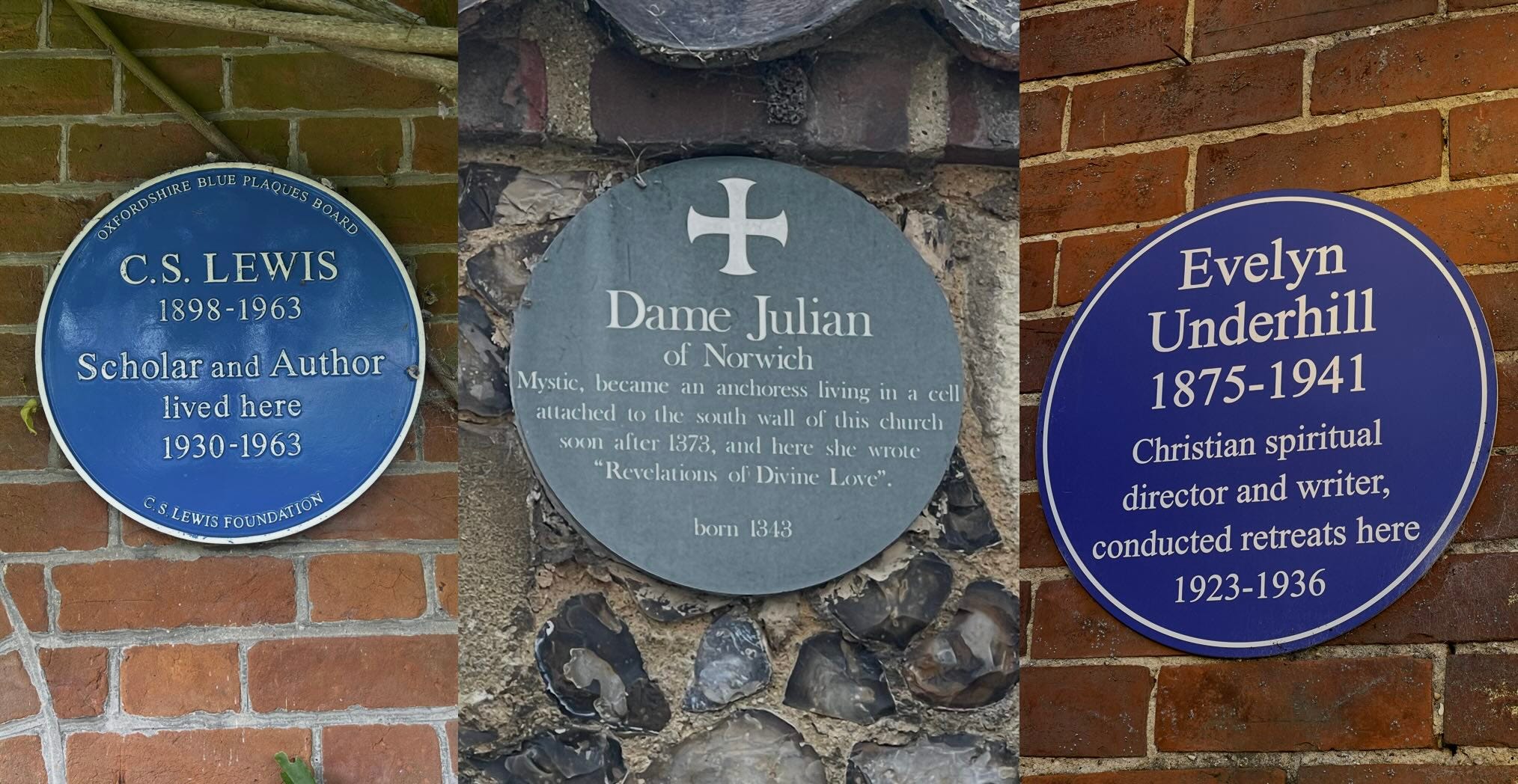
The people of the United Kingdom take pride in the many literary and cultural achievements of their heritage, and often will mark the home or some other significant site in the life of a great poet, artist, scientist or politician with a special blue plaque to commemorate the historical and cultural importance of the location. We saw plenty of plaques during our time in England (one of my favorites was one in Oxford, noting where Lewis Carroll first told the story that would later be written down as Alice in Wonderland), but of course there were three that mattered to us the most: the plaques marking the Kilns as C. S. Lewis’ home, Pleshey as Evelyn Underhill’s retreat center, and the Julian Shrine as the site where one of the great masterpieces of English mystical writing was penned.
Most people who dive into Western mystical spirituality soon learn a sense of wonder, based on how words like “God” or “Spirit” or “the Divine” point us to great mystery. For after all, mystery is the heart of mysticism. What I find so meaningful about the blue plaques associated with mystics I love, is just how ordinary are the sites they mark. These sites help us remember that even great mystics were just ordinary human beings like you and me. Visiting the Kilns and Pleshey and the Julian Shrine not only remind us how down-to-earth the mystics all were and are, but they help us to remember that we, alive today, are the current custodians of the great contemplative tradition. Whether any of our generation will be remembered as great teachers, writers, or world-renowned mystics is not for us to know; that’s for future generations to determine. Then again, the call of the mystical life is not about the future, it’s about the present. We are invited to live as deeply and soulfully today as Lewis, Underhill, and Julian lived, years in the past. May we find inspiration and a loving invitation to live our lives mystically and well.

Would you like to participate in a pilgrimage like this, the next time we go to England? Or perhaps similar spiritual pilgrimages to places like the Camino, or Ireland, or Iona? If so, then sign up for SDI’s Updates email list, so you can be kept informed of future pilgrimage possibilities.