

When I was younger, so much younger than today, I worked for several years managing a bookstore that served a small Episcopal university — including a seminary.1 By that point I had already been working with a spiritual director for several years and took my inner life seriously — at least as serious as any anxiety-ridden 27-year-old can.
One thing was for sure: I loved the writings of the mystics, and relished the opportunity to make sure a bookstore serving a theological seminary kept a generous selection of Christian mystical works in stock.
With that enthusiasm at play, when I met Dr. Robert Giannini, the seminary dean, I made a point of mentioning that I had an amateur love for mysticism, naively thinking that might impress the scholar. But his response what not what I expected.
Twenty years my senior, and no doubt more theologically conservative than I was, he wanted to make sure I knew what I was talking about — and he knew what he was dealing with. So he asked a simple question:
“Do you mean mysticism in the Evelyn Underhill sense, or mysticism in the Shirley Maclaine sense?”
If you are too young to remember the 1980s, let me explain. Actress Shirley MacLaine wrote a string of popular books about new age spirituality, beginning with her 1984 memoir, Out on a Limb. By the time I met Dr. Giannini, she had produced a television mini-series that explored her interest in such things as crystals, channeling, and reincarnation — topics that typically were not on the menu in most mainstream churches.
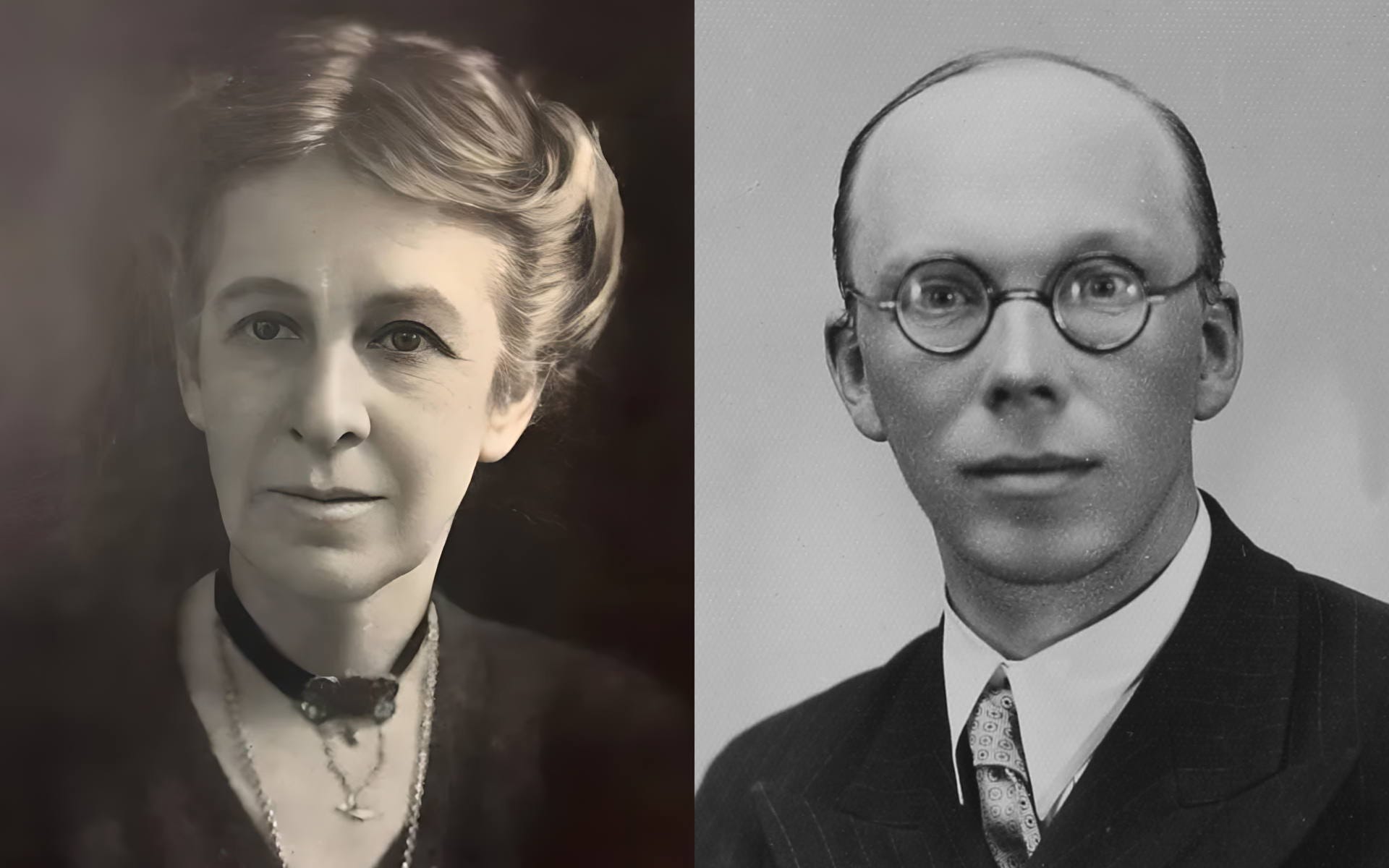
By contrast, Evelyn Underhill was noted for her advocacy of contemplative prayer, the wisdom teachings of the Christian mystics, and conformity to mainstream Christian doctrine. Communicating with spirits or using divination tools were not part of her approach to mysticism.
I was surprised by the dean’s question, but as I said, I was also a bit naive. It had never occurred to me that new agers might describe themselves as mystics or students of mysticism (yes, I eventually did discover this for myself). Nevertheless, I did not hesitate to answer his question, “Well, Underhill, of course!” He smiled, and we went on to talk about our shared interest in the Anglican laywoman and her writings. It was the start of a cordial if formal relationship that lasted until he left the seminary three years later.
The Two Faces of Christian Mysticism
I tell the story of my encounter with the seminary dean to illustrate something that I have pondered for many years now: and that’s how the word mysticism gets applied to a variety of spiritual practices, beliefs and perspectives.
Nobody as best I can tell will ever accuse Shirley Maclaine of being a Christian mystic. It seems to me that she is firmly grounded in the “spiritual but not religious” world. I say this without judgment or shame, just trying to be clear: and to set the stage for the main point of this article.
Which is this: over the years I have come to recognize that even within the Christian tradition, mysticism seems to be a word that can be broadly applied to two different ways of approaching spirituality and the inner life.
The dean asked me if my understanding of mysticism was closer to Evelyn Underhill and Shirley Maclaine. A fair question but it asked me to choose between a clearly Christian figure (Underhill) and a clear alternative (Maclaine, who journalists were calling “queen of the new age”).
But I’ve come to see that there are two broad categories of mysticism even within Christianity — certainly western Christianity. To illustrate, we’ll give Shirley MacLaine the night off, and pair Evelyn Underhill with another significant 20th century Christian mystic: Valentin Tomberg.
Mysticism in the Evelyn Underhill sense does overlap with mysticism in the Valentin Tomberg sense. Both types of mysticism are clearly anchored in the Christian tradition. But from there on, the differences seem to outshine the similarities.
Let’s call Evelyn Underhill a representative of contemplative mysticism. By contrast, Valentin Tomberg represents esoteric mysticism. Both are Christian, so there’s plenty of overlap: but there are significant differences as well. Let’s take a closer look.
Contemplative Mysticism
My entry into the world of mystical wisdom came through the writings of Evelyn Underhill, especially her 1911 magnum opus, Mysticism: A Study in the Nature and Development of Spiritual Consciousness. Although Underhill appears to be trying to make a universal statement about mysticism unencumbered by religious doctrine, she does not rise about her own cultural background and so the book very much considers mysticism from a thoroughly Christian perspective. Over the remaining 30 years of her life after the book was published, she did in fact become active in the Church of England and served the Christian community as a retreat leader and spiritual director. So it’s fair to say that Underhill’s exploration of mysticism is friendly to religious Christianity — at least of the Catholic/Anglican/mainline Protestant variety.
I call Underhill’s approach to mysticism contemplative for several reasons. To begin with, she draws very much from the mystical practices and teachings of the monasteries (and of monastic mystics down the ages). She also recognizes that contemplative prayer — the prayer of attentive, adoring silence — is the central practice of this type of mysticism. Like so many monastic mystics, Underhill emphasizes the cultivation of virtue, the turning away from selfishness and sinfulness, and the humble recognition that God is both the heart and the object of the mystical life. Underhill’s mysticism tends to be heart-centered, affective (emphasizing love over knowledge), accepting of church authority, and devotional in its focus. But it’s still mysticism: it promises the cultivation of a beautiful and exalted, perhaps even ecstatic, interior life that leads from purification to illumination and ultimately to nothing less than union with God.
Esoteric Mysticism
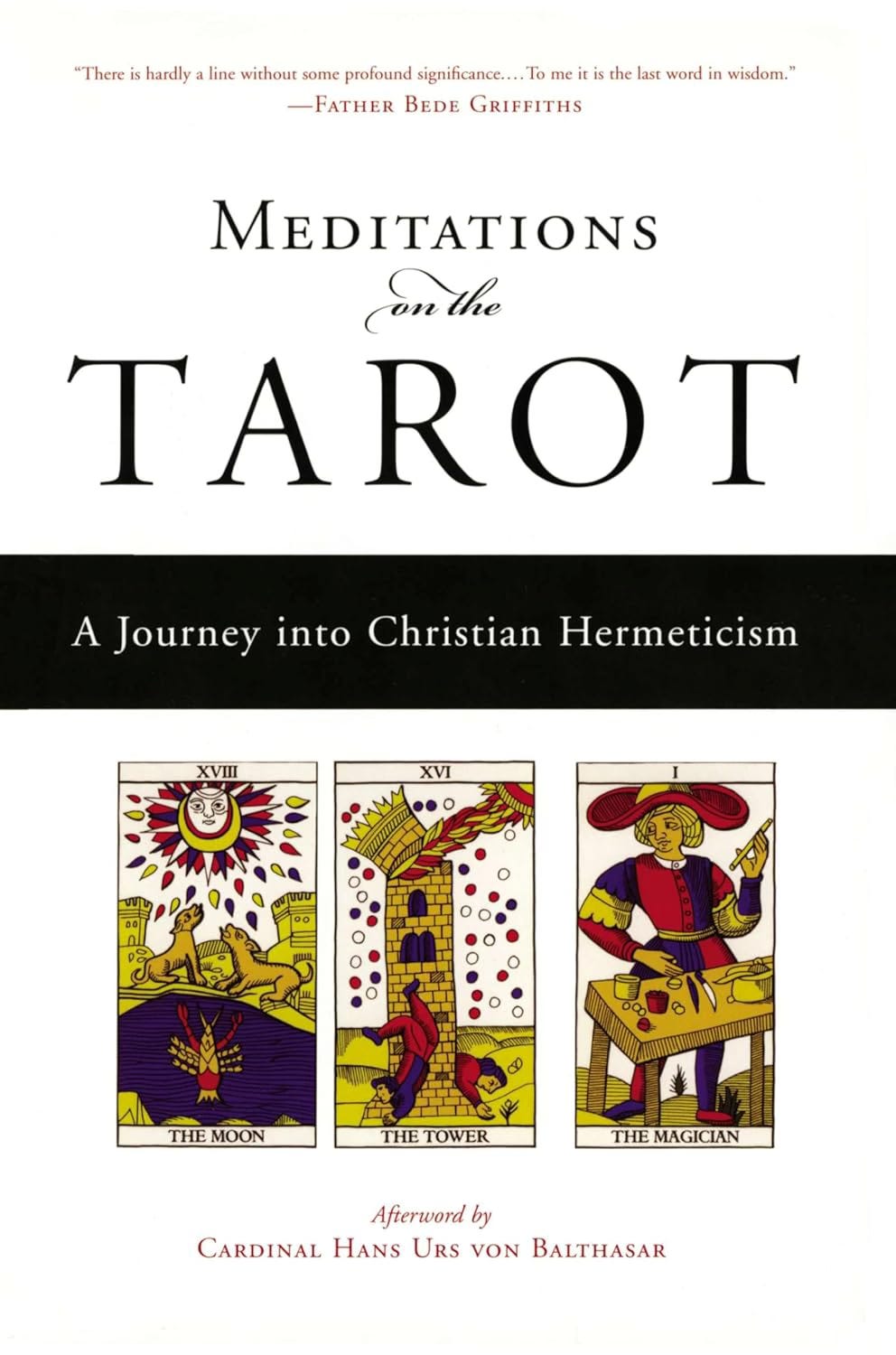
Valentin Tomberg represents a more esoteric or even hermitic expression of mysticism, especially when compared to Underhill; and to appreciate this, I have to disobey his own wishes and point out that he was the author of a challenging but highly renowned book that was published anonymously after his death. Meditations on the Tarot: A Journey Into Christian Hermeticism has a title and thematic content that seems almost guaranteed to scare off conservative and fundamentalist Christians: for the Tarot, after all, is associated with divination rather than devotion. But Tomberg is not promoting fortune telling; indeed, this book takes an almost Jungian approach to the Tarot cards, focusing on them as archetypal symbols rather than as a tool for psychic readings.
Interestingly, this book has been warmly received by many in the Christian world, especially among Catholics: Basil Pennington, Thomas Keating, Hans Urs Von Balthasar, and Bede Griffiths were among those who endorsed this book. It is even said that Pope John Paul II was a fan (you can find a picture online of the late pope with this book prominently visible on his desk, which in itself says little but still offers much food for thought). Tomberg, it turns out, was an adult convert to Catholicism, entering Christian practice after a season of life devoted to more esoteric pursuits like the study of anthroposophy, magic, the Kabbalah, and other hermetic disciplines.
Tomberg was something of a Renaissance man, and his wide interest in occultism, ceremonial magic, eastern spirituality, philosophy and psychology informs this rich and densely written book. But the heart of his “Christian hermeticism” remains the mystical path. His vision of mysticism is not hostile to the more contemplative variety championed by Underhill — it’s just much more intellectually broad and adventurous. This is an approach to mysticism that stresses the pursuit of knowledge, a willingness to draw connections across theological and philosophical differences, and a kind of broad willingness to hold doctrine and dogma loosely. Tomberg believes in angels, but also in reincarnation.
It is my experience that many people drawn to the riches of mystical Christianity tend to gravitate toward either the contemplative or the esoteric dimension of spirituality — and likewise tend to avoid the “other” dimension. In my experience, those who love the Rule of Saint Benedict often shy away from the teachings of Hermes Trismegistus. Those who are drawn to Rosicrucianism tend to avoid the stern teachings of the Carmelites or the Cistercians. Those who dive deep into the radical silence of Centering Prayer often tend to avoid the kind of philosophical depth found in the spirituality of Theosophy. And on it goes.
This isn’t a hard and fast distinction, of course; and thanks to the insightful work of spiritual teachers like Cynthia Bourgeault and Wayne Teasdale, it seems that more people are finding ways to bridge the contemplative depth of monastic mysticism with the imaginative richness of esoteric spirituality. Perhaps in the economy of divine grace, there’s room for both.
My point in writing this blog post is to celebrate that there is a rich variety of “types” in the world of mysticism. If you enter into mystical spirituality because you are drawn to psychic phenomena, esoteric knowledge, and even occult teachings, I encourage you to explore the wisdom of the many great nuns and monks down the centuries who are renowned as mystics. Likewise, if you found the mystical path thanks to the austere serenity of Thomas Merton or Simone Weil or Thomas Keating, don’t dismiss the more colorful stream of Christian esotericism: there’s wisdom to be found there as well.

The University of the South in Sewanee, TN; I ran the campus bookstore from 1998 to 1993.