

Whenever I publish a brief prayer, meditation, or reflection on a quote from a great mystic past or present, I post it on my Substack under the category of Mystical Journey. But what, exactly, do we mean when we speak of a mystical journey?
Journey may not be that hard of a word to wrap our heads around, but mystical is a humdinger. And when we talk about mysticism, we bump into an entire array of words that are all elusive or enigmatic in their own way: words like God or Spirit or ultimate reality or non-duality… So perhaps the first thing I need to say is that writing about mystical spirituality is nothing like writing about science or mathematics, because the words are mostly poetic, deeply metaphorical, and often carry a spectrum of factual and emotional meanings. Mysticism is an invitation into our inner worlds. Each one of us is a one-of-a-kind creation. So the very language we use will always be colored and shaped by our own uniqueness.
Maybe, then, I need to acknowledge that each of us is a singular miracle of divine creativity: “fearfully and wonderfully made,” as the Psalms put it. Given this uniqueness, the obvious question is: what does the concept of a mystical journey mean to you?
Whoever you are, and whatever your story might be, I am glad for us to journey together.
The mystical journey is for anyone and everyone, at any age or level of experience, who wants a deeper connection with God (the Sacred Mystery, which cannot be put into words). To be such a traveler is to seek to integrate the wisdom and teachings of great mystics and contemplatives into our own lives, our own spiritual practice, our own faith journey. This is a path for anyone who simply enjoys reading inspirational spiritual writing and finds that the insights, meditations, and reflections of the great mystics can inspire and encourage the spiritual journey today.
Why “Mystical Journey”?
First, the easy bit: Why a mystical journey? Well, life itself is a journey. For most of us, the journey from birth to death takes many years, and this is not meant to be a burden, but a joy. We experience many seasons and transitions over the course of this sojourn. We learn lessons, we grow and mature, and we attain wisdom that we can share with others.
Now, to the trickier bit: what makes life a mystical journey? Perhaps mysticism begins with a recognition that spirituality makes the most difference when it is embodied, experiential, contemplative, and visionary. This is one way (not the only way) of understanding what mysticism is: spirituality that is heart-centered, radiant with possibilities, and simultaneously both down-to-earth and joyously transcendent. Mystics tend to be found on both the margins and the cutting edge of society and faith community. They open up interior doorways to new ways of seeing, understanding, experiencing, and enjoying the Mystery that cannot be named (but for the sake of simplicity we call this Mystery God or Sacred or Divine.)
Since life is a journey, then naturally the mystical dimension of life also takes us on a journey. We do not “master” mysticism in a decisive moment or single life-event: as Brother Wayne Teasdale points out in his book The Mystic Heart, becoming a mystic is as much a process as an experience. We mature, we grow and change and blossom and unfold, in the life of contemplation and visionary knowing.
From ancient times, mystical teachers have spoken of different seasons of the mystical life, such as times of purification, illumination, and union. So let’s acknowledge (and celebrate) that everyone is at a different place in their own spiritual adventure. Mysticism is not a one-size-fits-all spirituality, and what nurtures you today may not necessarily be what you needed five years ago (or will need five years from now).
What about God?
As for “the Sacred Mystery,” there’s no good word for it, alas. Some find “God” helpful, but for others, that term seems obsolete or even triggering. Less fraught terminology like “Spirit,” “Sacred,” “Divine” or “Mystery” works for some, but not others. Likewise, “Goddess” or even “God the Mother” feels freeing to some, and unsettling to others. I will use a little bit of all these terms, and occasionally throw in other signifiers as well, to remind us that mysticism invites us to experience something that simply cannot be put into words. Please be patient when the language is not “your” language, and try to remember that the language you like will be problematic for others. I hope we can all be generous and hospitable as we seek to communicate what ultimately is beyond description.
If you’ve read this far, I’m assuming that spirituality matters to you, mystical experience and wisdom interests you, and that your heart seeks deeper intimacy with the Heart of the Mystery. This means you and I are kindred spirits. I certainly do not claim to have all the answers. We are co-learners here. Your comments, feedback, suggestions, insights, and ideas truly help me as I write this newsletter. Please, if something occurs to you, share it with me. I can’t promise that I can answer every idea or comment, but I do pledge to read them all, and to consider your input as I shape the future of this Substack. In a very real way, this is our project. A journey is so much more fun when you have travel companions. It is an honor to explore the mystical path with you.
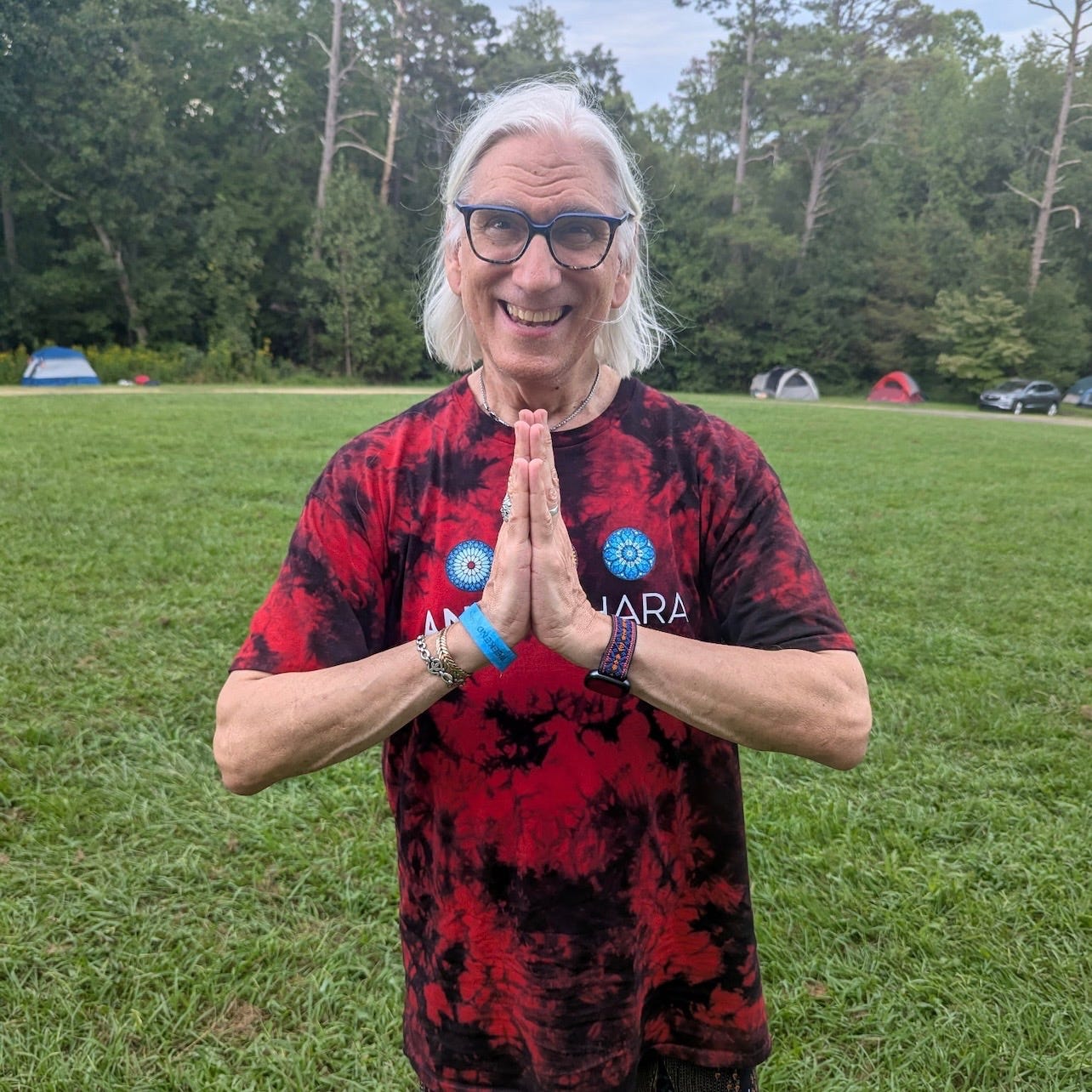
Finally, a brief word about me. I’ve written a few books on this topic and have been blogging about mysticism for a number of years now. Ah, when I was in college and sweating about what I wanted to be when I grew up, if only some friendly counselor could have told me I would become a mysticism blogger. That would have cleared things right up! Never mind that the word “blogger” didn’t exist back then.
I live outside of Atlanta, GA with my wife and several pampered cats; I’m a spiritual director and retreat leader in addition to the writing I do. I grew up Christian and still primarily identify as such, but I am also a student of the Buddha so I think of myself as “interspiritual” or “perennialist” or simply a “dual practitioner.” Like many people drawn to the mystical and contemplative dimensions of the inner life, I struggle with the institutional side of religion, so I try to write for both people who are religious as well as people who prefer to simply identify as spiritual. I had my first mystical experience when I was sixteen years old — almost half a century ago now — and I am still integrating it. Mysticism will do that to you.
Thanks for being here on this Substack with me. Until next time: please breathe gently, live deeply, love lavishly, and trust that you are a miracle in human form.
Blessings,
Skye

From the AnamChara archive: This article was first published on November 9, 2024. I’ve revised it slightly and am happy to share it with new readers and longtime subscribers alike.

I facilitate a centering prayer group and it seems like more and more people are interested in contemplative and “mystical” Christianity. When I think of mysticism for myself or discuss it with others, I keep it simple. A mystic is open to the presence of God/divine/extraordinary in everyday life. Mysticism is not an esoteric practice available to a select few. The mystical world view is a choice and available to each of us.
As a side note, I think there is a tendency to think of mystics as superior to the rest of us. The problem is that once we enter the contemplative path it can be tempting to think we are somehow better than those who are not on the path. So, the ego gets bigger which is the exact opposite of self emptying! I know this from personal experience!
Skye
The joy is in the journey with you. I am currently reading Spirituality where the body and soul encounter the sacred. I am looking forward to being with you at the end of this month at Rock Hill. Where my journey will continue.
Lou DeMarino
we met a Mepkin Abbey